
You're staring at a Google Ads dashboard showing a 4X ROAS. The champagne is practically chilling itself. Then you pull up your CRM, and the numbers look like they were generated by two different companies operating in parallel universes.
Welcome to the attribution window problem, where the gap between what Google tells you and what actually happened can make the difference between scaling a winner and doubling down on a dud.
Here's the thing about digital marketing in 2026: we've got more data than ever, and somehow we're still making decisions based on incomplete pictures. The culprit isn't bad tracking or incompetent analysts. It's the fundamental mismatch between how people buy and how platforms report.
The Invisible Clock Running on Every Click
A conversion window is the period after someone interacts with your ad during which Google will credit that ad for a conversion. Simple enough in theory. In practice, it's where marketing math gets weird.
Google offers click-through windows (1, 7, 30, 60, or 90 days) and view-through windows (typically 1 to 30 days). The default for most campaigns sits at 30 days for clicks and 1 day for views. But here's where it gets interesting: Google credits conversions to the date of the ad interaction, not the date of the actual conversion. Someone clicks your ad on March 1st, converts on March 15th, and Google reports that conversion on March 1st.
This backdating creates a reporting lag that can make fresh campaigns look like failures and mature campaigns look like heroes. You're essentially looking at a photograph of last week's weather while trying to decide if you need an umbrella today.
Why B2B Gets Hit Hardest
If you're selling impulse purchases, a 7-day window might capture most of your conversions. But B2B? We're playing a different game entirely.
High-consideration purchases like financial products, insurance, and enterprise software can have conversion windows stretching well past 30 days. Your prospect clicks an ad, downloads a whitepaper, gets pulled into three weeks of internal meetings, finally gets budget approval, and converts 47 days later. If your window is set to 30 days, that conversion vanishes into the void. Google never sees it. Your dashboard never reflects it. And you've already killed the campaign that generated it.
I've watched marketing teams cut budgets on campaigns that were actually their best performers because they couldn't wait for the data to mature. It's like judging a soufflé by opening the oven door every thirty seconds.
The Time Lag Report Nobody Uses
Google actually gives you the tools to understand this. The Time Lag Report in Google Ads shows you how long it takes users to convert after interacting with your ad. You can find it under Tools & Settings > Measurement > Attribution > Path Metrics.
What you'll typically see: maybe 30% convert on Day 0, another 25% on Day 1, and the rest trickling in over the following weeks. For B2B, that trickle can represent the majority of your actual revenue.
The problem is that most marketers check this report once, nod thoughtfully, and then go right back to making decisions based on 7-day snapshots. Data tells you the what, but only if you actually look at it.
The Real Scenario That Keeps CMOs Up at Night
Here's a real scenario: you're running two campaigns side by side. Campaign A shows 12 conversions in the first week. Campaign B shows 4. You cut Campaign B's budget and double down on A. Two weeks later, Campaign B's delayed conversions roll in. It actually drove 18 total. You just pulled the rug from under your better performer.
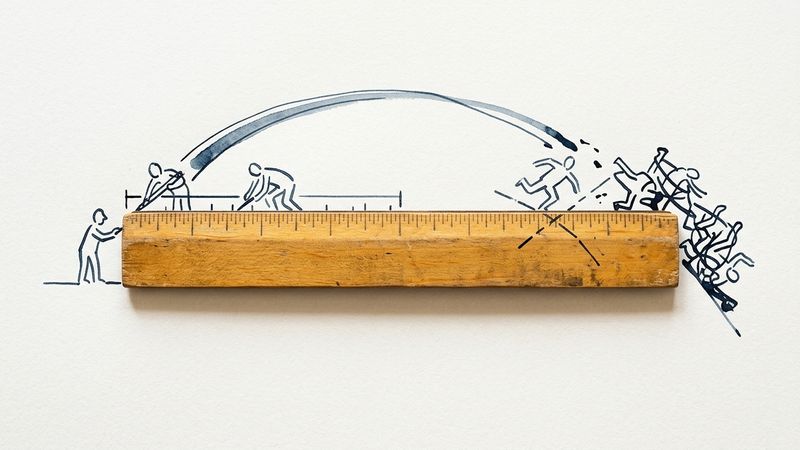
This isn't hypothetical. This happens in marketing departments every single day. And it's not because people are bad at their jobs. It's because the reporting infrastructure creates a systematic bias toward short-cycle conversions.
Smart Bidding makes this worse, not better. Target CPA, Target ROAS, and Maximize Conversions all rely on conversion data to calibrate themselves. Feed them partial data, and they optimize for the wrong outcomes. You end up with an algorithm that's really good at finding people who convert quickly, while systematically ignoring the enterprise deals that take six weeks to close but are worth ten times as much.
Setting Windows That Match Reality
The fix isn't complicated, but it requires actually knowing your business. Check your Time Lag Report and set windows that capture at least 75-80% of your conversions. For most B2B companies, that means 60 or 90 days for click-through attribution.
A few things to remember: changes to conversion windows only apply going forward. If you switch from 30 days to 60 days today, you won't retroactively capture conversions that fell outside your old window. You're setting up better measurement for the future, not fixing the past.
Also, if you're using GA4 conversions imported into Google Ads, the window must be set in GA4, not in Google Ads. This trips up more teams than I'd like to admit.
The Patience Problem
Here's the uncomfortable truth: proper attribution requires patience, and patience is the one thing most marketing organizations don't have. Stakeholders want weekly reports. Boards want monthly dashboards. Nobody wants to hear "we need to wait six more weeks before we know if this campaign worked."
But that's exactly what honest measurement demands. YouTube ads might take 90 days to convert while Google Search converts in 15 days. Treating them with the same reporting cadence is like comparing a marathon runner's pace at mile 2 to a sprinter's final time.
The solution isn't to abandon measurement. It's to build reporting frameworks that account for lag. Show stakeholders the "mature" data from 60 days ago alongside the "preliminary" data from last week. Make the uncertainty visible instead of pretending it doesn't exist.
The DJ Metaphor, Revisited
Marketing is like being a DJ at a wedding. You've got to read the room, know when to drop a classic, and when to sneak in something experimental. But here's what nobody tells you about DJing: the crowd's reaction to a song doesn't happen instantly. There's a delay between when you drop the track and when people actually start moving.
Attribution windows are that delay, measured and quantified. The marketers who understand this don't panic when the dance floor looks empty for the first thirty seconds. They wait for the beat to land.
Your conversion data is telling you a story. You just might need to wait a few more chapters before you know how it ends.


