
Most Performance Max campaigns optimize for clicks, conversions, or ROAS. None of those metrics tell you whether someone walked through your door. Google's new Local Customer Optimization feature, announced in August 2026, changes the objective function entirely: it prioritizes people who are physically close to your location and ready to act right now.
For B2B marketers with showrooms, branch offices, or partner storefronts, this is a different kind of campaign lever. It's not about awareness or even lead capture. It's about intercepting a buyer who is already navigating to a location, searching for a service, or planning a route on Google Maps or Waze. The question is whether the economics work for your business.
The Mechanics: What Google Actually Changed
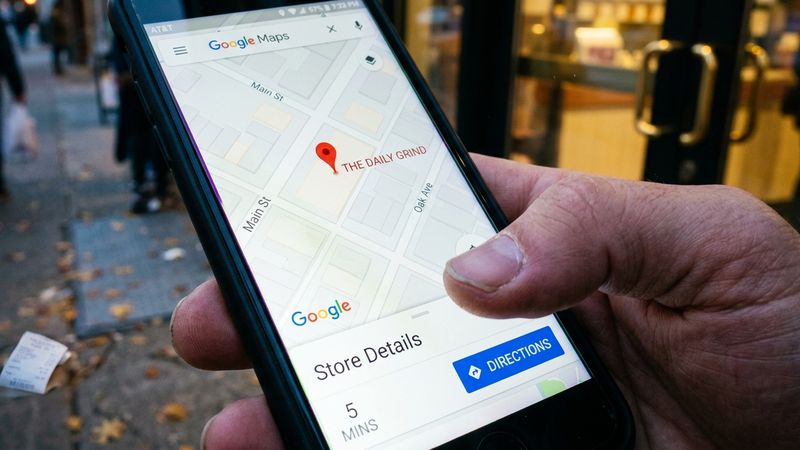
Google's new help documentation describes Local Customer Optimization as a feature within Performance Max campaigns for store goals. When enabled, the campaign shifts budget toward users who are actively navigating, trip-planning, or searching for locations across Google Maps, Waze, and local Search formats.
This is not a minor targeting tweak. It's a different optimization signal. Standard Performance Max campaigns optimize toward conversions you define, typically form fills, calls, or purchases. Local Customer Optimization optimizes toward proximity and immediate intent. The campaign learns to find people who are most likely to visit or contact your business within a short window, not people who might convert eventually.
According to PPC News Feed, the feature is available as a toggle during campaign setup for new Performance Max campaigns with store goals, or within the Budget and bidding optimization settings for existing campaigns. Once enabled, Google begins optimizing delivery toward nearby, high-intent users. You can turn it off at any time to return to standard Performance Max behavior.
One critical constraint: Google's documentation confirms that Local Customer Optimization is not compatible with Merchant Center product feeds or online conversion goals. If you're running a Performance Max campaign with a product feed, you'll need to create a separate store-goals campaign to use this feature. That's a structural decision, not a checkbox.
The Attribution Problem You're Inheriting
Here's where the CFO conversation gets uncomfortable. Local Customer Optimization optimizes toward store visits, direction requests, and local actions like call clicks. But Google's store visit measurement is modeled, not deterministic. Google uses location history from opted-in users, extrapolates to the broader population, and reports an estimated visit count.
The methodology is defensible at scale. Google surveys a panel of over 10 million Google Opinion Rewards volunteers to validate predicted visits against actual behavior. But the confidence interval widens as your volume drops. If you're running a regional B2B operation with three branch offices, you may not generate enough signal for Google to report store visits at all. The eligibility threshold requires sufficient foot traffic and geographic coverage.
This creates a measurement gap. You're optimizing toward a goal you may not be able to observe directly in the platform. The campaign will still run, and Google will still optimize toward proximity signals, but your reporting will show direction clicks and call clicks rather than verified visits. For finance teams accustomed to closed-loop attribution, this is a harder story to tell.
When the Economics Make Sense
Local Customer Optimization is not a universal upgrade. It's a specific tool for a specific problem: capturing demand from people who are already in motion.
The clearest use case is B2B businesses with physical locations where the buying decision happens on-site. Equipment distributors, industrial suppliers, commercial real estate brokers with showrooms, and professional services firms with walk-in consultations all fit this profile. If your sales cycle includes a site visit as a qualification step, intercepting buyers who are already searching for nearby options shortens time-to-revenue.
The math works when three conditions hold:
- First, your average deal value is high enough to absorb the cost of local impressions that don't convert.
- Second, your locations are in areas with sufficient population density to generate meaningful signal.
- Third, you have a way to track downstream outcomes, whether through CRM integration, call tracking, or manual attribution.
If you're a SaaS company with no physical presence, this feature does nothing for you. If you're a franchise operator with 200 locations, it could shift your entire local acquisition strategy.
The Pilot Design
Before you reallocate budget, run a controlled test. Here's a two-week pilot structure:
Week 1: Create a new Performance Max campaign for store goals with Local Customer Optimization enabled. Select a subset of locations, ideally three to five with comparable traffic patterns. Set a daily budget that represents 10-15% of your current local spend. Define your success metrics: direction clicks, call clicks, and if eligible, modeled store visits.
Week 2: Compare performance against your existing local campaigns. Look at cost per direction click, cost per call, and any downstream conversion data you can tie back. If you're tracking calls through a platform like Invoca or CallRail, match call volume to booked appointments or qualified leads.
The goal is not to prove the feature works. The goal is to understand the cost structure and signal quality for your specific locations. If direction clicks cost $8 and convert to qualified visits at 20%, you have a $40 cost per visit. If your average deal value is $5,000 and your close rate from visits is 15%, that's a $750 customer acquisition cost against a $5,000 deal. The math either works or it doesn't.
What This Means for the Broader Local Strategy
Google's move here is part of a larger consolidation. Local Services Ads are migrating into Performance Max with a pay-per-lead model. Local Customer Optimization adds another layer of proximity-based targeting. The direction is clear: Google wants all local advertising to flow through Performance Max, with AI handling the channel mix and bid optimization.
For marketing leaders, this means fewer manual levers and more reliance on signal quality. The campaigns that win will be the ones with the cleanest location data, the most accurate Business Profile information, and the tightest feedback loops between ad exposure and downstream outcomes. If your CRM can't tell you which customers came from a Maps search, you're flying blind.
The feature is live now. The question is whether your measurement infrastructure is ready to use it.


