
For years, PPC marketers had the perfect excuse. "We're capturing intent," we'd say, pointing to search queries as proof that our ads were meeting buyers exactly where they wanted to be met. It was a beautiful story: user types query, ad appears, conversion happens. Clean. Measurable. Defensible.
Google's Demand Gen campaigns just blew that story wide open.
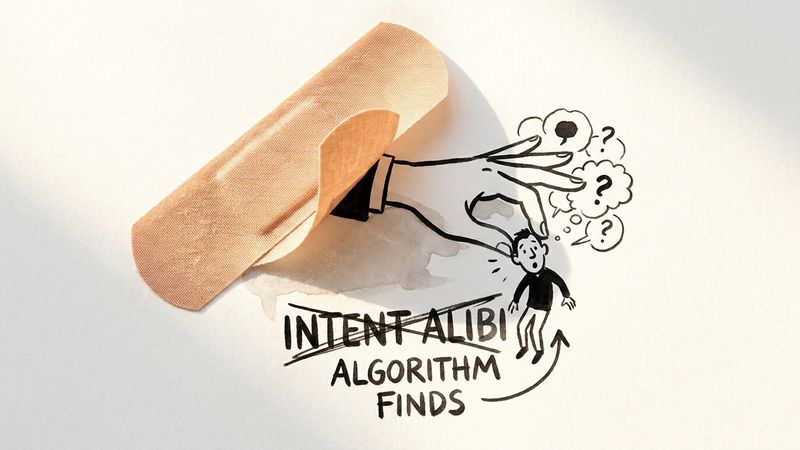
Here's what's actually happening: Google Ads has fundamentally pivoted from a Literal Era to a Predictive Era. The search query is no longer the command. It's merely one of thousands of signals the AI uses to predict whether a specific user is worth your bid. The old model was Query → Keyword → Ad. The new model? (User Signals + Journey History) × Creative Meaning = Predicted Conversion.
That's not capturing intent. That's manufacturing it.
The Comfortable Lie We Told Ourselves
PPC professionals have been hiding behind intent like it was a bulletproof vest. "Our leads are better because they searched for us." "We're not interrupting; we're answering." "The user came to us."
Except that's increasingly fiction. Traditional ads wait for intent; Demand Gen creates it by predicting who's most likely to buy based on behavior signals before the search even happens. Google isn't matching your keywords to queries anymore. It's evaluating a blend of behavioral signals, past interactions, and contextual cues to decide if showing your ad to this particular human will result in a conversion.
The query? That's just one data point in a much larger prediction model.
This matters because the entire PPC industry built its value proposition on intent. We justified higher CPCs, defended our budgets, and positioned ourselves as the "bottom of funnel" heroes who closed deals that brand marketers merely warmed up. Now Google is telling us, in the most Google way possible, that intent was always just a proxy for prediction, and they've gotten good enough at prediction that they don't need to wait for intent anymore.
Demand Gen as the Canary in the Coal Mine
Google's own research shows that leading brands are pivoting from demand capture to proactive demand generation. The social-first playbook that built the last decade of direct-to-consumer growth is no longer enough. Audience saturation is spiking. Customer acquisition costs are climbing. And marketers are facing a performance problem that can't be solved by simply bidding higher.
Demand Gen campaigns run across YouTube, Discover, Gmail, and the Display Network, reaching users during browsing moments rather than search moments. They rely on audience signals and behavioral modeling to proactively place ads in front of users, not waiting for someone to search but pushing your brand into feeds where people are consuming content.
The strategic purpose? Stimulate interest, shape intent, guide users toward eventual conversion. Notice the verb: shape. Not capture. Shape.
Google fundamentally changed how the Demand Gen algorithm decides who sees your ads in late 2025. Earlier versions leaned heavily on contextual matching, placing ads based on the content a user was browsing. The new version starts with the user, not the content. It identifies what a person is likely to buy based on behavior across Google properties, then selects the most relevant creative to show them.
Sound familiar? It should. That's exactly how Meta and TikTok work.
What This Means for B2B Marketers
If you're running B2B campaigns, the implications are significant. B2B sales cycles can take up to a year to finalize, according to 6sense research. That's a lot of time for Google's predictive models to identify, track, and influence your buyers before they ever type a branded search query.
The 95:5 rule that underpins modern demand generation thinking suggests that at any given time, only 5% of your target customers are actively looking to buy. If your entire PPC strategy is built around capturing that 5%, you're fighting over a shrinking pool while your competitors are busy shaping the other 95%.
Research shows that 78% of B2B CMOs believe proving ROI has become more important in the past two years. Nearly half are asked to justify their marketing spend to C-suite executives monthly. The temptation is to chase lead volume because it's a big number to present. But bowing to short-term pressure by advertising to broad audiences and setting low bars for what qualifies as a "lead" creates wasted spend and low conversion rates.
The shift isn't from PPC to something else. It's from PPC-as-intent-capture to PPC-as-prediction-engine. Your keywords still matter, but they matter as signals to the algorithm, not as direct commands.
The Creative Reckoning
Here's where it gets uncomfortable for performance marketers who've spent careers optimizing landing pages and bid strategies: Demand Gen is becoming a second Meta for brands
. The placements are visual. The targeting is behavioral. The success factors are creative quality and audience understanding, not keyword match types and quality scores.One practitioner reported taking a supplement brand from $14,000 a week to $82,000 a week in spend in just four months using Demand Gen. Another grew a bedding brand to $850,000 in spend in 40 days. These aren't search campaigns. These are visual, interruptive, prediction-driven campaigns that happen to live inside Google Ads.
The PPC manager who built their career on exact match keywords and negative keyword lists is now being asked to think like a creative director. The media buyer who prided themselves on ROAS optimization is now being asked to understand audience psychology. The performance marketer who dismissed brand building as "fluffy" is now being told that brand is the signal that makes prediction work.
Where Do We Go From Here?
The answer isn't to abandon search. 82% of Performance Max advertisers run it alongside Search or Shopping, not as a standalone replacement. Search still captures declared intent. It still converts at higher rates. It still matters.
But the honest conversation we need to have is this: intent was never the magic ingredient we claimed it was. It was a proxy for prediction, and Google has gotten good enough at prediction that they're willing to show us the man behind the curtain.
Demand generation focuses on building interest early, educating buyers consistently, and earning trust long before a purchase decision is made. It keeps the brand visible and credible while buyers move in and out of active consideration. That's not a replacement for PPC. That's what PPC is becoming.
The marketers who thrive in this environment will be the ones who stop hiding behind intent and start embracing prediction. They'll invest in first-party data because that's what feeds the algorithm. They'll prioritize creative because that's what captures attention in feed environments. They'll think about the full buyer journey because that's what the prediction models are optimizing for.
Marketing is like dating, remember? You don't propose on the first ad impression. But you also don't wait for someone to walk into the jewelry store before you introduce yourself. The best relationships start with a well-timed hello, not a desperate "I noticed you were searching for engagement rings."
Google just made that very clear. The question is whether we're ready to stop pretending otherwise.


