
Let me save you a meeting: ChatGPT ads won't replace your Google budget. They won't become your next "always-on" channel. And if your CFO is asking whether this is "the next big thing," the honest answer is: maybe, eventually, but not yet.
Here's what ChatGPT ads actually are right now: an expensive experiment with interesting signals, wrapped in a format nobody has cracked yet. That's not a dismissal. That's an invitation to be smart about it.
The Price of Admission Says Everything
OpenAI launched its self-serve ad platform in May 2026, and the economics tell you exactly who this is for. According to Digital Applied's breakdown, we're looking at $60 CPM with a $200,000 minimum spend. That's roughly three times what you'd pay on Meta for comparable reach.
Three times.
For a platform where the ad formats are, let's be generous, "minimal." A headline, a description, a square image, a link. No video. No carousel. No dynamic creative optimization. Just a polite little card sitting below the AI's response, hoping you'll notice it after ChatGPT has already answered your question.
This isn't democratized advertising. This is velvet-rope advertising. The $200K floor keeps out everyone except enterprise brands with experimental budgets and agencies trying to impress clients with "innovation" line items.
What You're Actually Buying
The pitch is compelling on paper. ChatGPT has over 300 million weekly active users, and they're not doom-scrolling. They're actively thinking through decisions, comparing options, asking follow-up questions. That's intent gold, right?
Sort of.
OpenAI's official principles make clear that ads won't influence ChatGPT's answers. They appear "at the bottom of answers" when there's a "relevant sponsored product or service based on your current conversation." The targeting is contextual, not behavioral. No deep conversational history mining. No hyper-personalization.
This is philosophically interesting and practically limiting. You're buying proximity to intent without the precision targeting that makes digital advertising actually work. It's like standing outside a store where you know people are shopping for your category, but you can't see what's in their cart.
Innovation Visual's analysis puts it well: the format "feels closer to a suggested next step than a traditional advertisement." That's either a feature or a bug depending on your conversion expectations.
The Measurement Problem Nobody Wants to Discuss
Here's where I get genuinely concerned for marketers rushing in.
Crealytics' strategic guide notes that "formats, targeting, pricing, and measurement standards are still evolving." That's a polite way of saying: you're flying blind on attribution.
ChatGPT collapses the traditional funnel. Someone asks about project management software, gets a comprehensive answer, maybe sees your ad, maybe clicks, maybe converts three weeks later after six more touchpoints. How do you attribute that? The platform doesn't have the measurement maturity of Google or Meta. You're essentially trusting vibes and hoping your brand lift studies catch something.
For a $200K minimum, that's a lot of faith.
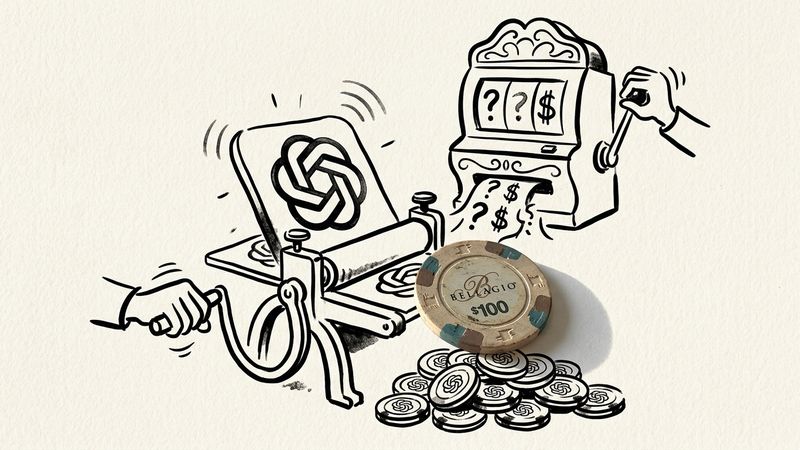
When the Tactical Bet Makes Sense
I'm not saying don't do it. I'm saying know what you're doing.
ChatGPT ads make sense as a tactical bet when:
You have genuine experimental budget. Not "we'll reallocate from performance channels" budget. Actual money set aside for learning, with no expectation of immediate ROI. If your board will ask about ROAS in Q4, this isn't your play.
Your category lives in consideration. B2B software, financial services, complex purchases where people genuinely research before buying. If someone's asking ChatGPT to compare enterprise CRM platforms, showing up in that moment has value. If you're selling impulse purchases, the conversational context works against you.
You want first-mover learning. Explore Digital's hypothesis correctly identifies that early adopters build channel knowledge before competition intensifies. The brands testing now will understand the format's quirks, the creative that resonates, the contexts that convert. That knowledge compounds.
You can tolerate ambiguity. OpenAI has been explicit that everything can change. The formats, the targeting, the pricing, the placements. You're not buying a mature media product. You're buying a beta with potential.
What This Isn't
ChatGPT ads are not a platform strategy. They're not going to anchor your media mix. They're not "the future of search advertising" in any near-term planning horizon.
They're a signal. A signal that conversational AI will eventually become an advertising surface. A signal that intent capture is moving earlier in the funnel. A signal that the Google-Meta duopoly might, someday, face a genuine third option.
But signals aren't strategies. And potential isn't performance.
The CMOs I respect are treating this like they treated early TikTok: small tests, clear learning objectives, no pressure to scale before the platform matures. They're not rewriting their 2027 plans around ChatGPT ads. They're allocating 2-3% of experimental budget to understand the mechanics.
The Honest Recommendation
If you have $200K you can genuinely afford to learn with, test it. Build internal knowledge. Understand how conversational context differs from search intent. Figure out what creative works when you're competing with an AI that just gave a comprehensive answer.
If that $200K needs to drive pipeline, put it somewhere with proven measurement and optimization levers. ChatGPT ads will still be there in 18 months, probably with better targeting, clearer attribution, and lower minimums.
Marketing is like dating, remember? You don't propose on the first ad impression. And you definitely don't bet the house on a platform that's still figuring out what it wants to be.
The brands that win here won't be the ones who spent the most in 2026. They'll be the ones who learned the most while spending responsibly. That's not a sexy conference keynote. But it's the truth.


