
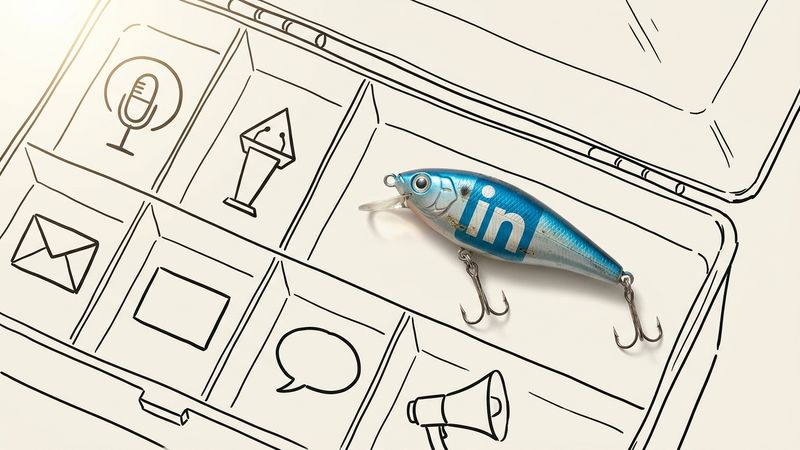
Here's a confession that might get my LinkedIn Premium revoked: I've been telling B2B marketers to diversify away from LinkedIn for the past 18 months. Not because the platform doesn't work (it does, spectacularly), but because the "just be on LinkedIn" advice has become the marketing equivalent of "just eat less and exercise more." Technically correct. Practically incomplete.
The numbers still favor LinkedIn. Research shows the platform generates 80% of B2B leads from social media, and 62% of marketers report it delivers leads at twice the rate of other platforms. But here's what those stats don't tell you: your buyer isn't always at their desk, scrolling through thought leadership posts between Zoom calls.
Clare Corriveau, VP of Marketing at Tekmetric, put it bluntly on a recent podcast: her buyers, auto repair shop owners, aren't on LinkedIn. They don't open emails. They don't attend webinars. Her team's solution? New marketing hires don't start with a deck. They start in a shop. Every employee gets a monthly stipend to visit customers, bring swag, and just ask how it's going.
That's not a LinkedIn strategy. That's a "meet your buyer where they actually live" strategy.
The Channel Mix That's Actually Working
A 2026 study of 90 B2B companies revealed a disconnect that should make every CMO uncomfortable: 61% of marketing leaders rate their digital ROI satisfaction as merely "moderate," yet they keep funneling 40-60% of their budgets into the same channels annually. Inbound efforts consistently outperform their weight, with 30 high-performing teams crediting inbound for exceeding expectations compared to only 19 for outbound. But budget allocation? Still perfectly split.
The teams pulling ahead aren't abandoning LinkedIn. They're treating it as one instrument in an orchestra, not a one-man band.
Events are having a moment. According to Vendelux's 2026 B2B Events Survey, 80% of organizations are maintaining or growing their event sponsorships this year. The catch? 86% can't accurately attribute ROI back to events, and 90% say events influence deals that never get credit in their CRM. That's not an events problem. That's a measurement problem. Industry surveys indicate 78% of B2B marketers consider in-person conferences their organization's most impactful marketing channel.
Podcasting has graduated from experiment to pipeline driver. The data is striking: 83% of senior executives reported listening to a podcast in the past week, spending 54+ minutes daily on audio content that influences strategic decisions. One cybersecurity firm attributed $2.3 million in pipeline to their podcast program. The average guest-to-client conversion rate on B2B podcasts sits at 10%, and one company converted 48% of strategically selected podcast guests from target accounts into pipeline opportunities.
HubSpot's data shows 91% of marketers plan to maintain or increase their investment in podcasts and audio content in 2026. That's not a trend. That's a consensus.
YouTube remains the most underrated B2B channel. Here's a case study that should make you rethink vanity metrics: A SaaS lawyer started a YouTube channel from zero. Four months later, with fewer than 400 subscribers and most videos pulling a couple hundred views, he'd generated dozens of booked calls. YouTube became his number one business channel. Meanwhile, a friend in the same niche hit 3,000 subscribers with zero booked calls.
The gap between chasing views and building a channel that drives pipeline is exactly where most B2B marketers get lost.
Community: The Channel That Doesn't Feel Like a Channel
Cold outreach reply rates are now averaging below 6% across many B2B campaigns. Community-sourced deals? Closing faster, with higher win rates and stronger lifetime value.
Discord now has 259.2 million monthly active users, and 78% of them are there for reasons beyond gaming. The structural advantage is simple: when a brand posts in a Discord server, every member sees it. No algorithm deciding who gets shown what. No paid boost required. For marketers watching organic reach decline on every other major platform, that difference matters.
Community-led growth isn't just having a Slack channel or a Facebook group. Real CLG means your community influences product decisions, creates content that attracts new prospects, and serves as a trusted environment where potential buyers can evaluate your solution through peer conversations.
The difference between CLG and traditional "community marketing" is intent. Community marketing is a tactic. CLG is a strategy where the community is embedded in how the company grows.
The Uncomfortable Truth About Channel Selection
B2B buyers now use an average of 10 different channels during their purchase journey, and 42% interact with more than 11 touchpoints before making a decision. That means choosing the right channel mix isn't optional anymore. It's the single biggest factor in whether your marketing generates pipeline or just generates impressions.
CMI's 2026 research surveyed over 1,000 B2B marketers and found the headlining takeaway reads: "Teams winning in 2026 aren't playing with prompts, churning out more content, or managing to the algorithms. They're building stronger muscles in marketing fundamentals, then letting AI breathe more creative life into those efforts."
The teams that excel in 3-5 channels consistently outperform those spreading resources thin across 15. Only 15% of marketing leaders report being "very satisfied" with their channel ROI, while 74% rate performance as merely "moderate."
What This Means for Your 2026 Strategy
Stop treating LinkedIn as your entire B2B strategy and start treating it as your anchor. Build around it with channels that match where your specific buyers actually spend time.
If your buyers are executives making strategic decisions, podcasts deserve serious investment. If they're practitioners solving daily problems, YouTube tutorials and community spaces will outperform thought leadership posts. If they're in industries that gather at trade shows, your event strategy needs to be more than "we'll have a booth."
The channels that win are the ones that build trust, show expertise clearly, and meet buyers where they research. Often through AI search, often through peer recommendations, often in places that don't show up in your attribution dashboard.
Marketing is still a marathon with weekly sprints. But in 2026, the runners who win aren't the ones who found the perfect single path. They're the ones who learned to navigate the whole course.


