
Here's a fun thought experiment: imagine spending six months on a content pillar that ranks beautifully, earns backlinks, and drives steady traffic. Now imagine that same piece being completely ignored when someone asks ChatGPT or Gemini a question you should own.
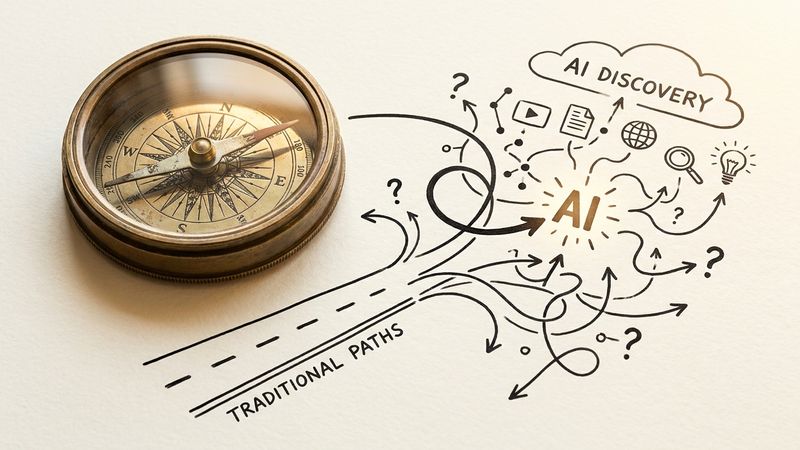
That's not hypothetical. It's happening right now to marketing teams who optimized for a game that's quietly changing rules mid-match.
According to recent research from Valasys Media, AI Overviews now appear in nearly 50% of all search queries, climbing as high as 82% in B2B tech and education sectors. The content competing for informational intent isn't fighting for position three on a results page anymore. It's fighting to be the one paragraph an AI decides to quote.
So what kind of content actually gets cited? Turns out, the answer is pretty specific, and it has less to do with your prose style than with how machines read.
Format Is No Longer a UX Decision
We used to structure content for humans. Headers made things skimmable. Bullet points helped impatient readers. Tables were optional flourishes.
That logic has inverted. As Valasys puts it, "We used to format so people would read; now we format so machines can think." AI systems assess three things above everything else: can this content be trusted, can it be understood cleanly, and can it be excerpted without distortion? Fail any one of those, and your content gets skipped. Not penalized. Just skipped.
SEOClarity's analysis reinforces this: AI search engines don't rank URLs the way traditional search does. They retrieve specific "chunks" of information. To be cited, your content must be organized into high-density, self-contained sections that an LLM can easily parse and synthesize.
This is where most B2B content falls apart. We've been trained to write narrative arcs, to build toward conclusions, to save the good stuff for the middle. AI doesn't have patience for that. Neither do users, honestly, but AI makes the impatience structural.
The Eight Formats That Actually Get Pulled
Based on Valasys's research and SEOClarity's optimization framework, here's what's working:
Direct-answer content. AI models have zero tolerance for preamble. If someone asks "what is account-based marketing," your content needs to answer that question in the first 50 words, not after three paragraphs of context-setting. Front-load the answer, then elaborate.
Structured comparison tables. When AI needs to synthesize "X vs. Y" queries, it looks for content that's already done the comparison work. Tables with clear headers, consistent formatting, and specific data points get excerpted far more reliably than prose comparisons.
FAQ blocks with question-style headings. This one's almost too obvious, but most teams still bury their FAQs at the bottom of pages. AI systems love content that mirrors the structure of user queries. "How does X work?" as an H2, followed by a direct answer, is catnip for retrieval systems.
High-density summaries (TLDRs). SEOClarity recommends adding "Key Takeaways" sections at the top of pages, not the bottom. This provides what they call a "high-density seed" that AI agents can easily pull for citations.
Step-by-step process content. Numbered sequences with clear action items. AI loves content it can excerpt as a complete, self-contained answer.
Definition-first glossary entries. Entity recognition matters enormously for LLMs. Content that clearly defines terms, especially industry-specific ones, builds the kind of semantic authority AI systems trust.
Data-backed claims with visible sourcing. AI systems are increasingly trained to prefer content that cites its sources. Unsourced assertions get treated with skepticism.
Structured data markup. Contentful's research emphasizes that machine-readable formatting enhances entity recognition and retrieval. Schema markup isn't just for rich snippets anymore; it's how you signal trustworthiness to AI systems.
The Google Guidance That Still Applies
Here's the good news: Google's official guidance confirms that the fundamentals haven't changed as much as the panic suggests. "Focus on making unique, non-commodity content that visitors from Search and your own readers will find helpful and satisfying," they write. "Then you're on the right path for success with our AI search experiences."
The difference is in execution. Google specifically notes that users in AI Mode are "asking longer and more specific questions, as well as follow-up questions to dig even deeper." Your content needs to anticipate those follow-ups, not just answer the surface query.
Technical requirements matter too. Google's documentation emphasizes ensuring Googlebot isn't blocked, pages return proper status codes, and structured data matches visible content. Basic hygiene, but you'd be surprised how many enterprise sites fail these checks.
The Uncomfortable Math
A Semrush study cited by Beebylarkmeyler projects that visitors from AI search will overtake those from traditional search by 2028. Nearly 60% of Google searches already result in no clicks because the answer is provided on the results page.
This isn't a future problem. It's a now problem.
The content that took months to produce, that earned backlinks and ranked well for years, may not even appear in AI-generated responses. Not because it's bad. Because it wasn't built for this. It was built for humans to click through to. AI doesn't click through. It reads, extracts, and synthesizes.
What This Means for Your Content Strategy
Stop thinking about content as destination pages and start thinking about it as source material. Every piece you publish should be structured so that AI can excerpt it cleanly, attribute it correctly, and trust it enough to cite.
This doesn't mean writing for robots at the expense of humans. The formats that work for AI, direct answers, clear structure, visible sourcing, also happen to be what impatient executives want when they're scanning content between meetings.
The teams that figure this out first will own the AI-generated answers in their categories. Everyone else will be producing content that ranks beautifully in a game that's already moved on.
Marketing is like dating, remember? You don't propose on the first ad impression. But you do need to show up where the conversation is actually happening. Right now, that conversation is increasingly happening inside AI interfaces, and your content either gets quoted or it doesn't exist.


