LinkedIn's default conversion setup focuses on form fills, counting a thank-you page view as a lead. However, your CRM reveals that many of these "leads" never respond to outreach. This discrepancy between LinkedIn's reports and actual pipeline entries leads to wasted budget.
The solution isn't more tracking but better tracking, aligned with downstream outcomes that your revenue team values. Here’s how to achieve that.
Why the Default Config Fails
LinkedIn's Insight Tag operates in the browser, but ad blockers, privacy settings, and cookie restrictions can cause you to miss 30–40% of conversion data. This mechanical issue is compounded by a strategic flaw: all captured conversions are treated equally. A content download and a demo request appear the same in Campaign Manager unless configured otherwise.
For B2B SaaS with lengthy sales cycles, this creates a significant attribution blind spot. You end up optimizing for what LinkedIn can track (form fills) instead of what truly matters (qualified pipeline). Consequently, campaigns may show low cost per lead (CPL) but yield little downstream value.
The Three-Layer Stack
A robust tracking architecture consists of three layers, each addressing a specific gap.
Layer 1: Insight Tag + event-specific conversions. Install the Insight Tag site-wide (Google Tag Manager simplifies this). Create distinct conversion actions for each significant event: demo booked, trial started, Lead Gen Form submitted. Use precise names — "Demo Request – Pricing Page" is better than "Conversion 1." Having one primary conversion objective per campaign ensures clean optimization and clear reporting.
Layer 2: Conversions API (CAPI). Server-side tracking sends data directly from your server to LinkedIn, avoiding browser-level blockers. As of 2026, LinkedIn has streamlined the setup process: you can generate access tokens directly from Campaign Manager, eliminating the need for a separate developer app.
A May 2026 update allows you to submit conversion events using only the Lead Gen Form response URN as the user identifier. This means that if someone fills out a Lead Gen Form and your CRM captures that response, you can push downstream conversion events (qualified lead, opportunity created) back to LinkedIn using just that URN, without complex email matching.
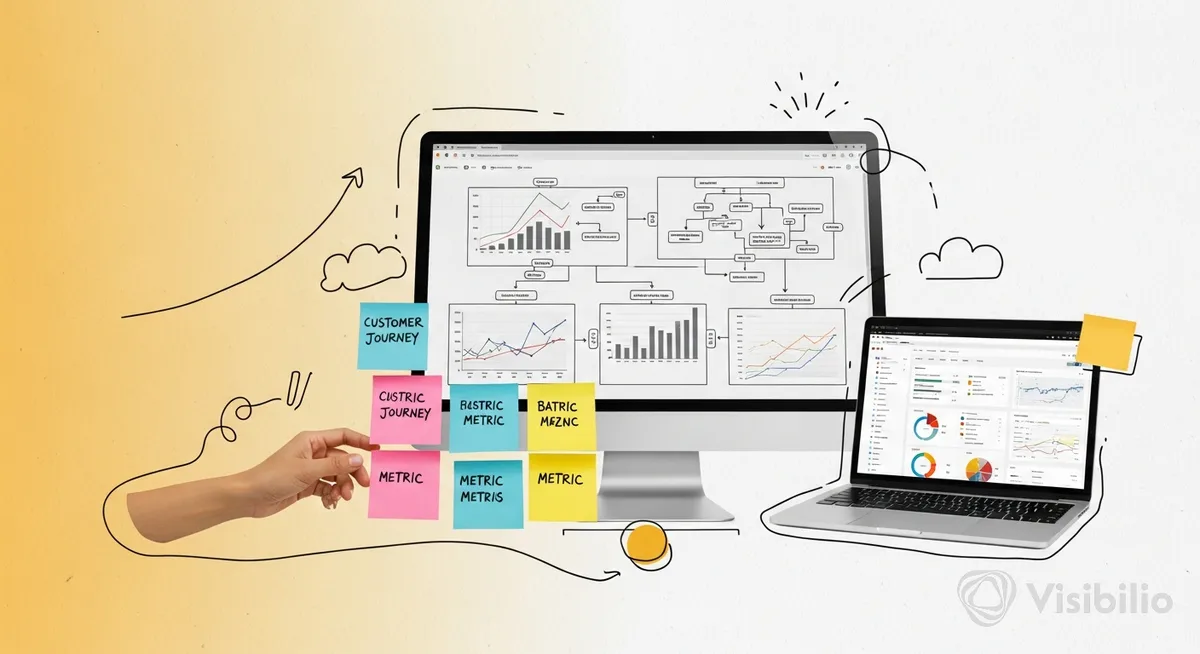
Layer 3: CRM/offline conversion uploads. This is where pipeline-focused tracking occurs. When a lead reaches a qualified stage in your CRM or creates an opportunity, push that event back to LinkedIn. The Conversions API now supports a 365-day lookback window for LEAD and QUALIFIED_LEAD conversion types, covering the entire sales cycle for enterprise SaaS deals that take 6–9 months from first touch to close.
Deduplication: The Part Everyone Skips
Using both Insight Tag and CAPI can result in the same conversion firing twice — once from the browser and once from your server. LinkedIn does not automatically deduplicate these entries. You must pass a consistent conversion ID across both methods so the platform can merge them. Neglecting this step inflates conversion counts, misrepresents CPA, and degrades optimization signals.
What to Measure (and What Not to Over-Interpret)
Benchmarks help set expectations but are planning ranges, not targets. Lead Gen Form conversion rates typically range from 6–15%, while landing page conversions from LinkedIn traffic are lower, around 1.5–5%. Demo or meeting requests convert at 2–5%, influenced by your ideal customer profile (ICP), offer friction, and targeting seniority.
Format also plays a role. ZenABM's 2026 dataset indicates Thought Leader Ads achieve a 2.68% CTR compared to 0.42% for Single Image Ads and 0.24% for Video. However, CTR is not a pipeline metric. Segment reporting by format can reveal creative fatigue and engagement patterns, allowing you to evaluate which format generates qualified pipeline at the best unit economics.
With tighter conversion definitions, expect a drop in volume before quality improves. Your next step should be to expand reach using the same qualification signal, not to relax the definitions.
Run It This Week
Setup: Audit your current LinkedIn conversion actions. Rebuild any that are generically labeled or track page loads without specificity. Create one primary conversion per campaign tied to a real pipeline action.
Launch: If you're not using CAPI, generate an access token from Campaign Manager and start with Lead Gen Form response URN matching for server-side tracking.
Guardrails: Primary metric = cost per qualified lead (not cost per form fill). Secondary = conversion-to-qualified rate. Stop-loss = if qualified volume drops more than 40% over two weeks without quality gain, revisit your conversion definition.
The hypothesis: shifting LinkedIn's optimization target from form fills to qualified leads via CAPI will decrease cost per qualified lead within 30 days, as the algorithm receives a more accurate signal about valuable conversions.
The 365-day lookback window means the data you push back today compounds over the next year. Each qualified lead, opportunity, and closed deal informs LinkedIn's algorithm about your actual buyer. Meanwhile, teams optimizing for thank-you page views are training the algorithm on the wrong signals, leading to mismatched pipeline and lead counts.