
Here's a scenario that should keep every CMO up at night: a billion people are now using Google's AI Mode, typing queries three times longer than traditional searches, and when they finally click through to your website, they're greeted by a homepage that wants to explain what your product category is.
They already know. The AI told them. They compared you to three competitors, narrowed their options, and clicked your link to do something. Your website responded by asking if they'd like to subscribe to a newsletter.
This is the mismatch that's quietly bleeding conversion rates across B2B marketing right now, and most of us haven't even noticed because we're still measuring the wrong things.
The Visitor Who Already Did Their Homework
Google's first AI Mode usage data, published on May 20, 2026, reveals a behavioral shift that should fundamentally change how we think about website architecture. One billion monthly active users. Queries triple the length of traditional search. Planning-related queries growing 80% faster than AI Mode queries overall.
Let me translate that from data-speak to marketing reality: the person clicking through from AI Mode is not the same person who typed "best CRM software" into Google in 2019. That old visitor was browsing, comparing, maybe killing time before a meeting. The AI Mode visitor has already browsed. They've already compared. The AI did that work for them, inside the conversation, before they ever saw your domain name.
A three-word query ("best running shoes") signals someone at the top of a funnel. A query three times longer ("which stability running shoes work best for overpronation in humid weather with same-day pickup near me") signals someone at the bottom. They're carrying constraints and context the AI gave them. They're not asking "What are my options?" They're asking "Where do I complete the action I've already decided to take?"
And then they land on your website, which immediately tries to convince them they have a problem they should solve.
The 42% Premium You're Probably Leaving on the Table
Here's where it gets interesting for anyone who has to justify marketing spend to a CFO. Adobe's Q2 2026 AI traffic report found that AI-referred retail traffic now converts 42% above non-AI traffic. That's not a marginal improvement. That's a complete reversal from the previous gap.
The 42% premium exists because the AI did the qualification work. The visitor compared three products inside ChatGPT, narrowed to one, and clicked the link. They arrive at your product page with intent that a traditional organic visitor takes five page views to build.
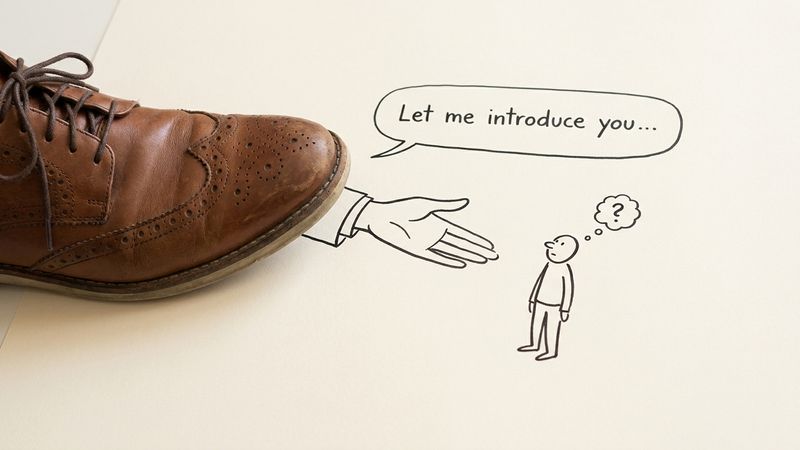
But here's the catch: that premium disappears when your website forces the AI-referred visitor through the same awareness-to-decision pipeline designed for someone who arrived cold. The mismatch between visitor intent and page architecture is the gap most websites haven't closed.
Think about it like this: marketing is like dating, and you don't propose on the first ad impression. But what happens when someone shows up already engaged? You don't make them go through the first three dates again. You hand them the ring.
Your Website Assumes Ignorance
Most B2B websites are built around an assumption that made sense five years ago: visitors need education. They need to understand the problem, learn about solutions, compare features, read case studies, and gradually build enough confidence to request a demo.
That architecture worked when search delivered people at various stages of awareness. It fails spectacularly when AI delivers people who've already completed the awareness and consideration stages inside a conversation you weren't part of.
Pull up your top landing pages right now. Ask yourself: can an AI-referred visitor complete their intended task within 30 seconds? If the answer is no, you're actively working against the conversion premium these visitors bring.
The planning query growth confirms this isn't a temporary blip. An 80% faster growth rate in planning queries means AI Mode is increasingly where people go to plan the action, not discover the category. The discovery happened earlier, or inside the AI itself. The click-through is the execution step.
The Extractability Problem Nobody's Talking About
There's a second layer to this challenge that goes beyond page architecture. Recent analysis from LimeLight Marketing found that the average ecommerce site scores 8.7 out of 100 on AI extractability. That's not a failing grade. That's a "start over."
When AI crawlers scan your pages, they extract something called Markdown, a simplified version of your HTML that strips out most visual elements. If your site is dominated by images, carousels, and JavaScript, the AI might extract nothing more than your navigation and footer. The entire middle of the page? Blank.
This means two things for B2B marketers. First, if AI can't read your content, you won't be recommended in the conversation that happens before the click. Second, even if you get the click, the visitor's expectations were set by whatever the AI could extract, which might be wildly different from what you actually offer.
A product with a 4.5-star rating displayed as an image? AI sees "581 reviews" with no idea what the rating actually is. Your carefully crafted value proposition rendered in a hero banner? Invisible to the machines deciding whether to recommend you.
What Actually Needs to Change
Let's get practical. Here's what I'd tell any CMO who asked me how to close this gap:
Segment your analytics by traffic source. AI-referred visitors behave differently. Measure them differently. If you're averaging AI traffic with direct and organic, you're hiding the signal in the noise.
Audit your landing pages for task completion time. Not time on page. Time to complete the task the visitor came to do. For AI-referred traffic, that number should be under 30 seconds. If it's not, you're forcing high-intent visitors through low-intent funnels.
Add text equivalents for every visual element that carries meaning. Star ratings, feature comparisons, pricing tiers. If it matters, it needs to exist in text form, not just as an image or icon.
Kill the persuasion steps for visitors who don't need persuading. This might mean dynamic landing pages that detect referral source, or it might mean rethinking your entire conversion architecture. Either way, stop making decided visitors re-decide.
Test your pages through an AI crawler's eyes. There are tools that show you what Markdown gets extracted from your pages. Use them. What you see might be humbling.
The Funnel Isn't Dead. It's Just Not Universal Anymore.
I'm not suggesting we abandon the awareness-to-decision framework entirely. Some visitors still need education. Some still need nurturing. The traditional funnel still works for traditional traffic.
But a billion people are now arriving at websites having already completed the top and middle of that funnel inside an AI conversation. They're ready to act. They're pre-qualified. They convert 42% better than everyone else.
The question isn't whether this shift is happening. Google just told us it is. The question is whether your website is built for the visitors who actually show up, or for the visitors you assumed would come.
Data tells you the what. Brand tells you the why. But right now, the data is telling us something pretty clear: the visitor changed. Time to change the welcome mat.


