
Google's new AI Max testing tools promise to let you run multi-campaign A/B experiments in ten clicks. That sounds like a productivity win. The harder question is whether the underlying system delivers ROI you can defend in a pipeline review.
Google's August 2026 announcement introduced the ability to test different budgets and ROI targets across multiple Search campaigns in a single experiment, rolling out this September. The update also lets advertisers run AI Max experiments with brand and location controls enabled, which removes a friction point that previously forced teams to choose between guardrails and testing. Performance Planner now applies suggested changes in one click. On paper, this is a meaningful reduction in setup overhead.
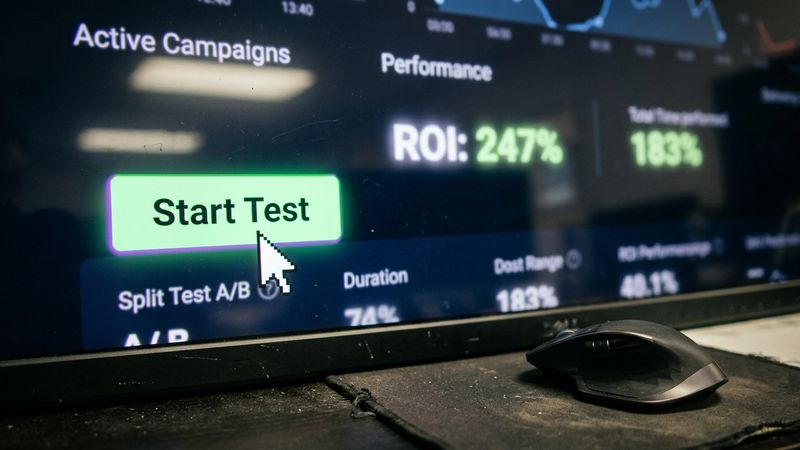
The demo MediaPost covered shows ten clicks to configure an A/B test, compared to the one-click experiments Google introduced last September. That's not a regression; it reflects the added complexity of testing budget and ROI targets across a portfolio of campaigns rather than toggling a single feature. For accounts managing spend across multiple campaigns, the ability to evaluate a broader strategy while maintaining a control group is operationally useful.
The Performance Gap Nobody Wants to Model
Here's where the math gets uncomfortable. Google claims AI Max delivers 14 to 27 percent conversion lift, with the higher end reserved for campaigns heavily using exact and phrase match keywords. Independent testing by Digital Applied found that only 16 percent of advertisers report good performance with the feature.
A LinkedIn thread from a PPC practitioner documented four months of testing where AI Max cost $100.37 per conversion, compared to $52.69 for exact match and $43.97 for phrase match. That's a 90 percent higher cost per conversion than the best-performing traditional match type.
The gap between Google's case studies and typical advertiser experience is not a mystery. AI Max expands keyword targeting based on search intent, which means your carefully curated keyword lists become suggestions. As one practitioner explained
, if you don't have solid conversion tracking in place, the system will drift, expanding its targeting toward whatever it thinks you're looking for. If it's wrong, that means wasted ad spend.Google's own documentation acknowledges that AI Max won't be effective if campaigns are limited by budget. An alert will appear if a campaign or portfolio is budget-constrained when AI Max is enabled. This is a polite way of saying the system needs room to explore, and exploration costs money before it generates learning.
Budget Floors and Data Requirements
The minimum budget question matters more than most teams realize. Agency testing suggests $750 per day for consistent performance, though Google's official minimum is $50 per day. The difference reflects the gap between technically functional and generating enough conversion data for the algorithm to optimize effectively.
TrackBee's analysis puts the data problem in sharper terms: browser tracking misses 30 to 60 percent of conversions, and AI Max optimizes on your conversion data. If those signals are incomplete, the system optimizes toward the wrong thing with total confidence. Starting September 2026, Google begins auto-upgrading campaigns that use automatically created assets and campaign-level broad match. If your conversion tracking isn't server-side and complete, you're handing the keys to a system that can't see the road.
Where the New Testing Tools Actually Help
The September update addresses a real operational pain point. Previously, testing AI Max meant removing brand or location controls, which made the experiment results less representative of how the campaign would actually run. Search Engine Journal notes that advertisers can now run AI Max experiments with those guardrails in place, which should produce more actionable data.
The multi-campaign testing capability is useful for accounts where budgets and bidding targets are managed across a portfolio. Instead of evaluating each campaign independently, you can test a broader strategy while maintaining a control group. That's a legitimate improvement in experiment design, not just a reduction in clicks.
Performance Planner's one-click implementation is a smaller win, but it removes a step where changes could be misapplied or delayed. For teams running monthly or quarterly planning cycles, the ability to move from forecast to implementation without manual re-entry reduces error rates.
The Pilot Design That Survives Finance Review
If you're going to test AI Max, structure it as a controlled experiment with clear success criteria:
- Run it in a separate campaign, not layered on existing Search campaigns
- Add your brand keywords as negatives
- Add all keywords already targeted in Search as negatives to avoid cannibalization
- Use a controlled budget for testing
- Measure incremental conversions only, not overlap with existing campaigns
Define Digital Academy's recommendation is blunt: never toggle AI Max on in existing campaigns. You may have spent months refining high-intent keyword lists, negative keyword structure, tested ad copy, and calibrated Smart Bidding. Toggling AI Max could override all of that, shifting spend back to brand clicks and erasing your careful work.
The 10-click setup is a workflow improvement. The underlying question remains: does AI Max deliver ROI that justifies the budget and the loss of control? The answer depends on your conversion tracking maturity, your budget headroom, and your tolerance for the system learning on your dime. Model the downside before you model the upside. If the worst-case cost per conversion is 90 percent higher than your current phrase match performance, size the test budget accordingly and set a kill switch before you start.


