
Here's a stat that should ruin your Monday morning: according to Forrester's 2026 B2B Buyer Journey report, 72% of B2B software buyers now use ChatGPT as part of their vendor evaluation process. Meanwhile, Crackle PR's Q2 2026 AI Citation Benchmark found that 51% of B2B tech brands have zero citations across ChatGPT, Perplexity, and Gemini.
Let me translate: the majority of your buyers are asking AI who to trust, and the majority of vendors aren't in the answer. If marketing is like dating, this is showing up to the party after everyone's already paired off.
The Shortlist Gets Built Before You Know It Exists
We've spent years optimizing for the funnel. Awareness, consideration, decision. Nurture sequences. Lead scoring. The whole beautiful machinery of modern B2B marketing.
The problem? 6sense's 2025 Buyer Experience Report found that 95% of the time, the winning vendor was already on the buyer's Day One shortlist. And the pre-contact favorite wins the deal in 80% of cases.
That means by the time someone fills out your demo form, they've probably already decided you're the one. Or they've already decided you're not. Either way, the decision happened somewhere your attribution tools can't see it.
Where did it happen? Increasingly, in a chat window with an AI that synthesized your entire market positioning in about four seconds.
Semrush's survey of 600+ U.S. B2B professionals found that 92% say AI has shaped their vendor shortlist, with 45% saying it did so significantly. This isn't experimental behavior from early adopters. This is mainstream research workflow.
The Earned Media Advantage
Here's where it gets interesting for anyone who's been skeptical about PR's ROI.
Crackle PR's benchmark broke down where ChatGPT pulls its B2B vendor citations from: 71% come from earned media placements, 29% from owned content. Your blog posts matter, but third-party validation matters more.
This tracks with what Forrester's research shows: 71% of buyers read a tier-1 article about a vendor before requesting a demo. AI search is increasingly one of the channels where those articles get surfaced.
The link between PR coverage and pipeline just got a lot more direct than it was two years ago. That analyst briefing you've been putting off? The trade publication pitch you deprioritized for another webinar? Might be time to reconsider.
Brand Recognition Doesn't Save You
If you're thinking "we're a known brand, we'll be fine," I have uncomfortable news.
Semrush's research found that only 7% of buyers say they notice a vendor in an AI response because they recognize the name. What makes a vendor stand out is how precisely the AI's answer matches what the buyer is looking for.
This is a fundamental shift. In traditional search, brand recognition bought you clicks even when your content wasn't the best match. In AI search, the model is synthesizing and summarizing. It's not showing ten blue links and letting familiarity win. It's answering the question directly, and if your positioning isn't clear enough to be surfaced, summarized, and cited, you're invisible.
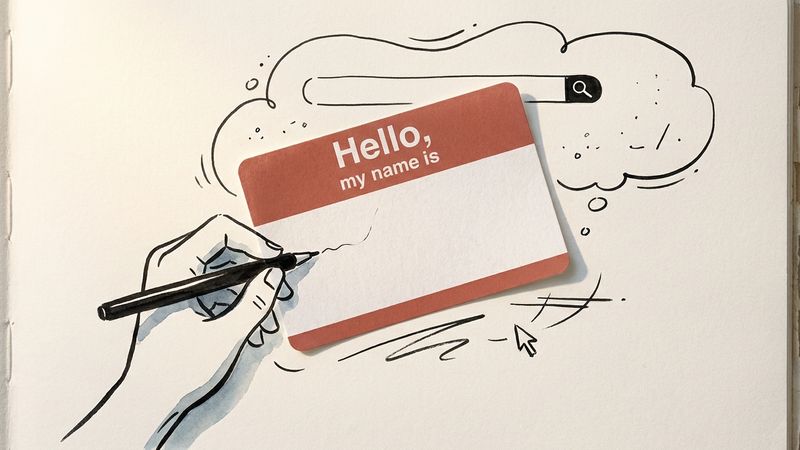
G2's research found that 50% of buyers now start their software buying journey in an AI chatbot instead of Google. That figure jumped 71% versus their survey four months earlier. The behavior shift isn't coming. It's here.
What Actually Gets You Cited
Let's get tactical. If AI tools are pulling from earned media and synthesizing answers based on clarity and relevance, what does that mean for your content strategy?
First, specificity wins. MarketingProfs notes that Perplexity searches average 10 to 11 words versus two to three on traditional Google search. Buyers are asking conversational, contextual questions. "Best marketing automation platform for financial services under 1,000 employees with Salesforce integration" is the query, not "marketing automation software."
Your content needs to answer those specific questions. Industry context. Company size relevance. Integration details. The nuance that used to be "nice to have" is now the difference between being cited and being invisible.
Second, structure matters. Forrester's analysis emphasizes that content needs to be readable by LLMs and AI agents, not just humans. Metadata, FAQs, structured data, topic clusters. The technical SEO work you've been doing for Google? It applies here too, but with different optimization targets.
Third, third-party validation is non-negotiable. TrustRadius reports that 90% of surveyed buyers click through AI Overview cited sources to fact-check responses. They're not blindly trusting the AI. They're using it as a research accelerator, then validating. If the AI cites an analyst report or a tier-1 publication that mentions you favorably, that's the credibility signal that converts.
The Measurement Problem
Here's the part nobody wants to talk about: we can't track most of this.
Forrester estimates that AI-generated traffic is currently 2-6% of B2B organic traffic and growing at 40%+ month-over-month. But that's just the traffic that clicks through. The buyer who asks ChatGPT for a vendor comparison, gets their answer, and never visits your site? That's invisible to your analytics.
As one analysis put it, the buying journey hasn't disappeared. It's just moved somewhere your attribution tools can't see it.
This is uncomfortable for anyone who's built their career on proving marketing ROI through dashboards. But it's also an opportunity to have a more honest conversation about brand investment, about the work that shapes perception before the click ever happens.
The Uncomfortable Truth
We've spent a decade getting really good at measuring the measurable. Click-through rates. Conversion rates. Cost per lead. The whole apparatus of performance marketing.
AI search is forcing us to remember that the most important moments in a buying decision often happen in places we can't track. A conversation with a colleague. A recommendation from a trusted advisor. And now, a query to an AI that synthesizes your entire market presence into a single answer.
Gartner's 2026 B2B Buying Journey report counts a median of 17 touchpoints before a B2B tech buyer contacts sales, with buying committees averaging 8.2 people. AI search is increasingly one of those touchpoints, and it's one where the stakes are high because the shortlist gets built fast.
If 51% of B2B tech brands have zero AI citations, that's not a competitive disadvantage. That's a coverage gap with direct pipeline consequences.
The good news? If you're reading this, you're early enough to do something about it. The bad news? So is everyone else who's paying attention.


