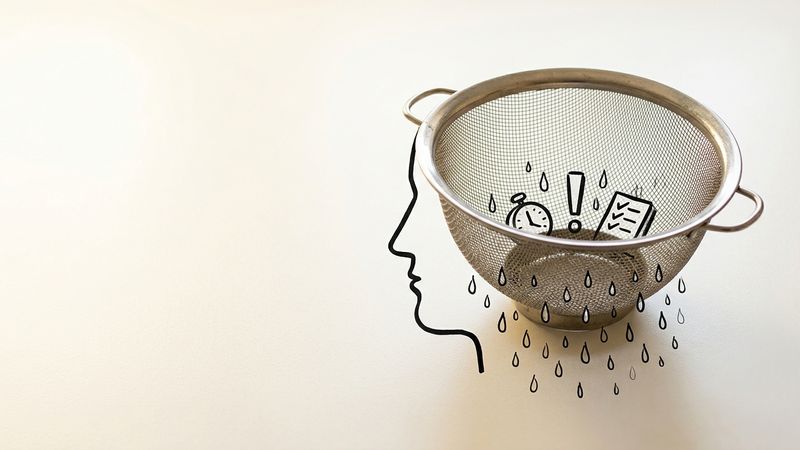
Here's a stat that should keep every CMO up at night: your prospects forget roughly 90% of what you tell them within a week. Not because your message was bad, necessarily, but because their brains are doing exactly what brains do: filtering out anything that doesn't feel urgent, relevant, or actionable.
So when we talk about persuasive messaging, we're really talking about something more primal: how do you become the signal in a world of noise? How do you get remembered when your buyer's inbox looks like a war zone and their attention span has been shredded by a decade of doom-scrolling?
New research is finally giving us some answers, and they're not what most of us assumed.
The Loss Aversion Myth Gets a Reality Check
For years, we've operated under a simple assumption borrowed from behavioral economics: people are more motivated by what they might lose than by what they might gain. It's why so much B2B messaging sounds vaguely threatening. "Don't fall behind your competitors." "The cost of inaction." "What you're leaving on the table."
Turns out, that's only half the story.
Research conducted with cognitive neuroscientist Dr. Carmen Simon used biometric technology to track attention, eye movements, emotional responses, and memory across four different message types. The winner wasn't fear-based messaging. It was what researchers call "Gain/Active" messaging: content that emphasizes positive outcomes while reminding buyers they have control over what happens next.
Read that again. It's not just about painting a rosy picture. It's about agency. Your buyer needs to feel like they're the protagonist of the story, not a passive recipient of your solution.
This flips the script on a lot of conventional B2B copywriting. We've been so busy trying to scare people into action that we forgot to make them feel powerful.
The Attitudinal-Behavioral Cocktail
If the Allego research tells us what to say, a study from Penn's Annenberg School tells us how to structure it.
Researchers Dolores Albarracín and Yubo Zhou tested three types of message statements: attitudinal ("I liked the product"), behavioral ("I bought the product"), and combined ("I liked buying the product"). Across multiple experiments, combined statements consistently outperformed the others.
Why? Because combined messages trigger what psychologists call mental simulation. When someone reads "I liked buying the car," their brain doesn't just process information; it rehearses the action. They imagine themselves doing the thing. And information that enables people to imagine themselves performing a behavior is significantly more likely to influence their decisions.
For B2B marketers, this has immediate implications. Your case studies shouldn't just say "Company X achieved 40% efficiency gains." They should say "Company X's operations team loved implementing the solution and achieved 40% efficiency gains." The attitudinal component (loved implementing) combined with the behavioral outcome (achieved gains) creates a more persuasive package than either alone.
It's a small linguistic shift with outsized impact.
Cialdini's Principles, Updated for 2026
No conversation about persuasion is complete without Robert Cialdini's six principles, but as MarketingProfs notes, these principles work best when they're not treated as manipulation tactics but as trust-building frameworks.
Let me translate a few for the current B2B landscape:
Reciprocity isn't about giving away free ebooks in exchange for email addresses anymore. That transaction has become so transactional that it barely registers. Real reciprocity in 2026 means providing genuine value before asking for anything: ungated research, useful tools, insights that help your prospect do their job better whether they buy from you or not.
Social proof has evolved beyond logos on a landing page. Your buyers are sophisticated enough to know that "trusted by 500+ companies" means nothing if those companies aren't like theirs. Specificity is the new social proof. "Used by 47 mid-market healthcare IT teams" beats "trusted by thousands" every time.
Scarcity is the trickiest one. Artificial urgency ("Only 3 spots left!") has been so overused that it triggers skepticism rather than action. But genuine scarcity, like limited implementation bandwidth or a pricing model that changes with scale, still works when it's real and communicated honestly.
The Framework That Actually Sticks
Pam Didner's messaging framework offers a practical structure for putting all this psychology into practice. The core idea: map your messages directly to customer pain points and challenges, not to your product features.
This sounds obvious, but watch how most B2B companies actually message. They lead with what they built, not what the buyer feels. They describe capabilities instead of outcomes. They talk about themselves when they should be talking about the customer's world.
A messaging framework that resonates starts with the customer's language, not yours. What words do they use to describe their problems? What keeps them up at night? What would success look like in their terms, not your marketing terms?
Then, and only then, do you connect your solution to that reality.
Making Memory Work for You
Here's where it gets practical. If you want buyers to remember your message, you need to design for memory, not just attention.
Attention is easy. A provocative subject line, a bold claim, a pattern interrupt. But attention without memory is just noise that briefly got louder.
Memory requires three things: emotional resonance, distinctiveness, and repetition with variation. Your message needs to make people feel something (the Gain/Active approach). It needs to stand out from the sea of sameness in your category. And it needs to show up multiple times in slightly different forms, because a single touchpoint, no matter how brilliant, rarely creates lasting recall.
The research on combined attitudinal-behavioral statements gives us a template for distinctiveness. Most B2B messaging is purely behavioral: "Achieve X result." Adding the attitudinal component ("Teams love achieving X result") creates a different texture that stands out precisely because it's rare.
The Real Competitive Advantage
I've been in rooms where marketers debate messaging for hours, obsessing over word choice and value propositions, only to ship something that sounds exactly like their competitors. The psychology of persuasion isn't about finding magic words. It's about understanding that your buyer is a human being with limited cognitive bandwidth, a deep need to feel in control, and a brain that's constantly asking "why should I care about this?"
Answer that question with specificity. Make them the hero. Combine attitude with action. And for the love of all things marketing, stop trying to scare them into buying.
The brands that win in 2026 won't be the ones with the cleverest copy. They'll be the ones who understood that persuasion isn't something you do to buyers. It's something you do with them.