
The Human Content Ecosystem: Why Your Best Marketing Asset Isn't AI
National Rail, the umbrella brand for Britain's railways, has 26,000 Instagram followers. Not exactly a social media juggernaut. Yet when they partnered with creator William Shears to film two passengers sharing life stories over cups of tea on a train, those posts combined for over 50,000 likes. Their typical engagement? A few dozen per post.
That's not a fluke. That's the market telling us something.
We're living through what I call the Great Content Paradox of 2026. AI tools have made it cheaper and faster than ever to produce content at scale. And yet, Sprout Social's Q4 2025 Pulse Survey found that human-generated content is now the thing audiences want most from brands on social media. Not slicker production. Not more posts. Human fingerprints.
The Trust Deficit Nobody Budgeted For
Here's where it gets uncomfortable for anyone who's been leaning hard on generative AI for content production: 88% of survey respondents say AI-generated videos have weakened their trust in news on social media. That's not a marginal finding. That's nearly nine out of ten users actively pulling back from content that feels manufactured.
The backlash isn't aimed at AI itself. It's aimed at what industry observers are calling "AI slop": low-quality, obviously generated content that feels uncurated or published without human judgment. Reddit communities are banning AI-generated posts. LinkedIn users call out synthetic content in comments. Newsletters proudly badge themselves as "100% human-written."
55% of consumers now say they're more likely to trust brands committed to publishing content created by humans. For Millennials, that number jumps to 62%. And according to Clutch's 2026 research, 87% would stop supporting a brand if its actions went against its stated values. Authenticity isn't a nice-to-have anymore. It's table stakes.
What a Human Content Ecosystem Actually Looks Like
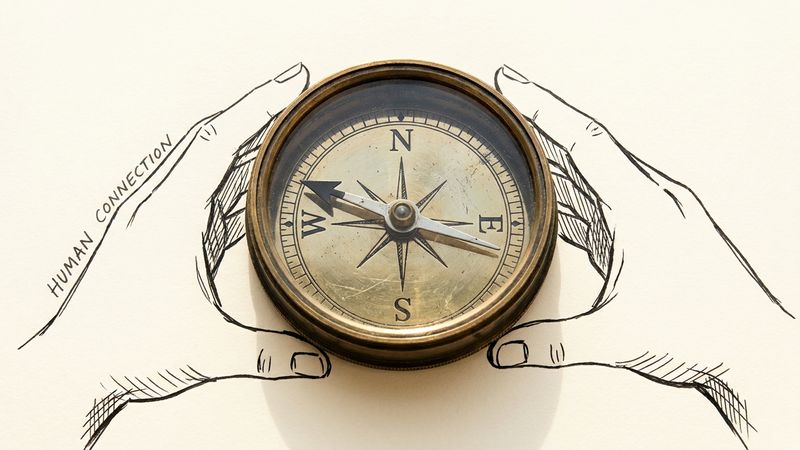
So what do you do with this information? You don't abandon AI (that ship has sailed, and frankly, it's a useful ship). You build what I call a Human Content Ecosystem: a strategic framework where AI handles the scaffolding while humans provide the soul.
Think of it as three concentric circles:
The inner circle: Your people. Employee advocacy isn't optional anymore. Employee-shared content generates 8x more engagement than brand-shared content. Employee stories outperform ads by 12x. The math is brutal for anyone still treating corporate social accounts as the primary channel. Your employees' collective networks dwarf your brand's reach, and their voices carry credibility that no logo ever will.
Gartner predicted that by the end of 2023, 90% of B2B social media marketing strategies would incorporate scaled employee advocacy programs. We're past that deadline, and the companies that listened are seeing 4x more leads and 2x higher conversion rates.
The middle circle: Your customers. National Rail's tea-and-conversation campaign worked because it let real passengers tell real stories. Every one of your customers has a reason why your brand is part of their life. The question is whether you're creating the conditions for those stories to surface.
User-generated content isn't just cheaper than produced content. It's more trusted. When potential customers see real people sharing genuine experiences, it builds the kind of credibility that no amount of production value can manufacture.
The outer circle: Creator partnerships. The creator economy has matured past the "pay for a post" model. The brands seeing sustained success are those using creators to tell stories that only humans can tell: the messy, specific, emotionally resonant narratives that algorithms can't replicate.
The Operational Reality
Building a human content ecosystem requires more than good intentions. It requires infrastructure.
First, you need a content governance framework that distinguishes between content that can be AI-assisted (research, first drafts, data analysis, scheduling) and content that must remain human-led (storytelling, community engagement, crisis response, anything requiring emotional intelligence).
Second, you need employee enablement that goes beyond "please share our posts." Effective employee advocacy programs provide employees with content they actually want to share, in their own voice, with their own perspective. The moment it feels like corporate ventriloquism, you've lost the authenticity advantage.
Third, you need measurement frameworks that capture what actually matters. Engagement rates on employee content. Sentiment analysis on UGC. Trust metrics alongside reach metrics. The data shows that blogging, SEO, and website content still deliver the highest ROI for marketers, but only when that content carries genuine perspective rather than keyword-stuffed filler.
The Competitive Moat Nobody's Talking About
Here's the strategic insight that keeps getting buried under tactical discussions about AI tools: authenticity is becoming a competitive moat.
As AI makes content production trivially easy, the differentiator shifts to what AI can't provide: genuine human perspective, institutional knowledge, emotional resonance, and the kind of specificity that comes from lived experience. The brands that invest in human content ecosystems now are building something their competitors can't easily replicate.
ICUC data shows that lo-fi content drives up to twice as many comments as highly produced campaign posts. That's not a rejection of quality. It's a preference for authenticity over polish. Audiences want to feel that a real person stood behind the message.
The Path Forward
The question isn't whether to use AI in your content strategy. The question is whether you're building a system where AI amplifies human voices or replaces them.
The brands winning in 2026 aren't the ones producing the most content. They're the ones producing content that feels most human. They're activating employees as trusted voices. They're creating conditions for customer stories to emerge. They're partnering with creators who bring genuine perspective rather than just reach.
Marketing has always been about connection. The tools change. The channels evolve. But the fundamental job remains the same: make people feel something, and give them a reason to trust you.
AI can help you work faster. Only humans can help you work deeper.


