
Somewhere in your CRM right now, there's a beautiful funnel visualization. Awareness at the top, consideration in the middle, decision at the bottom. Clean lines. Predictable stages. A comforting fiction.
I've spent two decades watching marketers worship at the altar of the linear funnel, and I've finally accepted the truth: it's less a map of buyer behavior and more a collective hallucination we've all agreed to share. The data coming out of Dreamdata's latest research doesn't just challenge this model. It buries it.
88 Touches, 10 Stakeholders, 272 Days
Let's start with the numbers that should make every CMO reconsider their attribution models. According to Dreamdata's 2026 LinkedIn Ads Benchmarks Report, the average B2B customer journey now involves 88 touchpoints across 4 channels, with 10 stakeholders participating in the decision. The timeline? A staggering 272 days from first touch to closed revenue.
Read that again. Nearly nine months. Eighty-eight interactions. Ten people who all need to agree.
And here's the kicker: 81% of that journey happens outside the sales pipeline. Up from 70% last year. Your sales team isn't losing deals in the demo room. They're losing them in the seven months of invisible activity that happened before anyone picked up the phone.
Lars Grønnegaard, Dreamdata's CPO and co-founder, has been beating this drum for years. As he noted in a recent podcast appearance:
The fundamental problem here is not lack of data or tracking... but the problem is all this data doesn't really connect.
Lars Grønnegaard
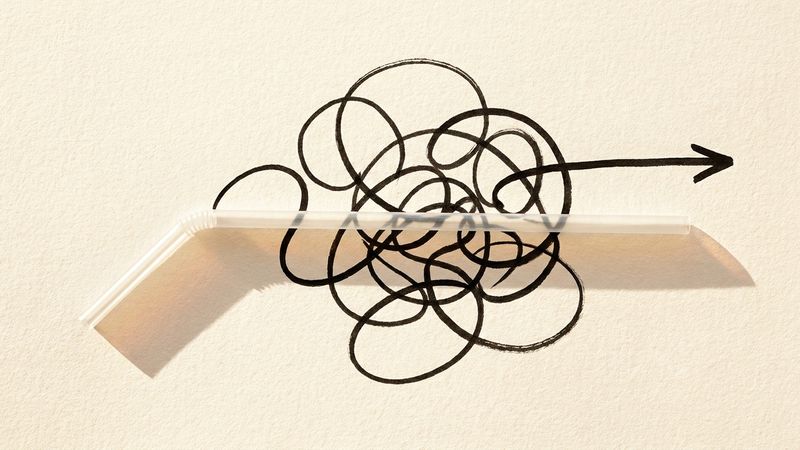
The funnel assumes a single buyer moving through discrete stages. Reality delivers a committee navigating chaos.
The Committee Problem Nobody Wants to Solve
Remember when B2B sales meant finding the decision-maker? That person doesn't exist anymore, at least not in isolation.
Gartner's 2025 research puts the average B2B buying committee at 9 to 11 stakeholders, up from 5 to 7 in 2017. For deals over $250K, Intentsify reports that number can climb to 15 people. Each stakeholder enters the process at different times, with different priorities, armed with their own independent research.
This isn't a funnel. It's a negotiation among people who may never be in the same room together.
The implications for marketing are profound. You're not nurturing a lead through stages. You're trying to build consensus across a distributed group of humans who each have veto power and competing agendas. The CFO cares about ROI. The IT director cares about integration. The end users care about whether this thing will make their Tuesday mornings less miserable.
Your content strategy needs to speak to all of them, often simultaneously, without knowing which combination of stakeholders will ultimately drive the decision.
The Dark Funnel Ate Your Attribution
Here's where it gets uncomfortable for those of us who've built careers on measurable marketing.
Research from 6sense shows that 73% of the B2B buying journey happens anonymously before a buyer ever contacts a vendor. Even more sobering: 83% of buyers fully define their purchase requirements before speaking with sales. They've already decided what they want. They're just shopping for who delivers it.
This invisible research phase, what the industry calls the dark funnel, includes everything your tracking pixels can't see: Slack conversations, peer recommendations at industry dinners, questions asked to ChatGPT at 11pm. Similarweb reports that 70% of the B2B buyer journey is over before your prospect ever contacts sales.
The traditional response to this problem has been to throw more tracking at it. More pixels. More forms. More gates. But as Dreamdata's analysis of the dark funnel points out, the goal isn't to track everything. It's to understand the funnel's impact through methods like self-reported attribution and by investing in brand-building activities within these channels.
In other words: stop trying to measure the unmeasurable. Start showing up where the conversations are happening.
What Actually Works When the Funnel Breaks
If the linear model is dead, what replaces it? Based on the data, three principles emerge.
First, think in buying groups, not leads. NVIDIA's approach, as shared at a recent Intentsify webinar, involves measuring four distinct types of propensity:
- Propensity to engage (2-4 years from purchase)
- Propensity to buy (when roughly 75% of the buying group is engaging)
- Propensity to buy again
- Propensity to churn
When they identify the right buying group engagement patterns, they see 100% reply rates from target accounts. That's not a typo.
Second, invest in the 95%. Grønnegaard has referenced the 95:5 rule on LinkedIn: only 5% of your B2B audience is in-market at any given time. Yet most marketing budgets chase that 5% with retargeting and paid search. The companies winning the long game are building mental availability with the 95% who will buy someday, just not today.
Third, accept that loops are the new funnel. WeAreBrain's analysis of client pipelines found that buyers regularly revisit earlier stages as new information emerges or stakeholders enter the conversation. A buyer champion gets pushback from their CFO and suddenly they're back comparing alternatives, even after they've requested a demo. Your content and sales motion need to support re-entry at any stage, not just forward progression.
The Measurement Paradox
Here's the uncomfortable truth for data-driven marketers: the more sophisticated your attribution becomes, the more you realize how much you can't attribute.
Dreamdata's platform exists precisely because this problem is so acute. By connecting data across the go-to-market tech stack, they can piece together touchpoints that would otherwise remain invisible. But even with that visibility, Grønnegaard estimates that:
You can probably cancel somewhere between 25 and 75 percent of your ad spend and see no impact on your pipeline performance.
Lars Grønnegaard
That's not an argument against measurement. It's an argument for humility about what measurement can tell us. The funnel was never a description of buyer behavior. It was a framework that made our jobs easier to explain in board meetings. The real buyer journey is messier, longer, and involves more people than any visualization can capture.
Playing the Long Game
Marketing has always been part art, part science. The funnel gave us the illusion that we'd solved for the art and could focus purely on the science. The data says otherwise.
The companies winning in B2B right now aren't the ones with the most sophisticated attribution models. They're the ones who've accepted that 272 days, 88 touchpoints, and 10 stakeholders require a fundamentally different approach:
- Less capture demand, more create memory
- Less qualify the lead, more enable the committee
- Less measure everything, more show up everywhere that matters
The funnel isn't broken. It was never real in the first place. The sooner we stop pretending otherwise, the sooner we can build marketing strategies that match how humans actually make decisions.


