
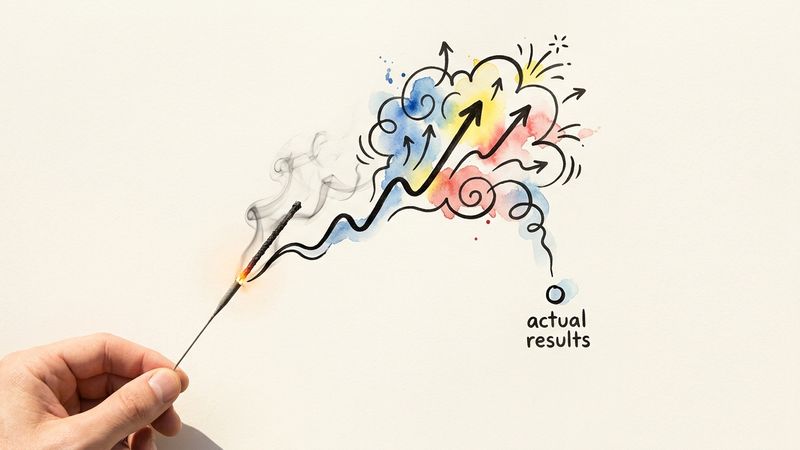
Here's a confession that might get my CMO card revoked: I've watched companies burn through six figures on paid search while their marketing teams celebrated "impressions" like they were actual revenue. The dashboards looked gorgeous. The results were fiction.
The uncomfortable truth about PPC in 2026 is that most channel mix decisions aren't decisions at all. They're habits dressed up as strategy. Last year's budget plus 10%, spread across the same platforms, justified by the same vanity metrics. Rinse, repeat, wonder why growth flatlined.
So when I came across Erin Patterson's breakdown at Platform81 on building a PPC channel mix that actually pays off, I found myself nodding at my screen like a lunatic. Not because it's revolutionary rocket science, but because it articulates the first principle most marketers skip entirely: paid search harvests demand, it doesn't create it.
The Empty Pond Problem
Patterson's fishing metaphor is perfect, so I'm stealing it. Pouring budget into search when nobody's searching for your product is like casting lines into an empty pond. You can have the fanciest rod, the most optimized bait, the best bid management AI money can buy. Doesn't matter. No fish, no catch.
This is where B2B marketers especially get themselves into trouble. We fall in love with the precision of search. Someone types "enterprise CRM implementation" into Google, we show up, they click, magic happens. Except when you're selling something genuinely new, something that solves a problem your prospects don't know they have, that search volume doesn't exist yet.
Your first fork in the road, then, isn't "Google or Meta?" It's "Does demand already exist, or do I need to create it first?" Get this wrong and everything downstream is wasted budget wearing a nice suit.
The 2026 Cost Reality Check
Let's talk numbers, because strategy without math is just vibes.
According to Patterson's 2026 benchmarks, Google Search cost per click now sits between $2.96 and $5.42 depending on whose dataset you trust. That's the steepest climb since 2021, driven largely by AI search compressing organic clicks and shoving more competition into the paid auction. Translation: Google clicks are the most expensive they've ever been.
Microsoft Ads, meanwhile, runs roughly 33% cheaper on comparable queries, with the gap widening past 40% in dense auctions like legal and B2B. Yet only about a third of advertisers bother with it. This is the marketing equivalent of everyone crowding into the expensive restaurant while the equally good place next door has open tables.
Why does this matter for your channel mix? Because efficiency isn't optional anymore. When clicks cost this much, allocation becomes the difference between campaigns that quietly drain money and campaigns that actually fund themselves.
Demand-First Budgeting
Here's where most budget planning goes sideways. Modo25's recent analysis nails the problem: most PPC budgets are built by copying last year's numbers and nudging percentages. It feels safe. It's also how you bake old mistakes into new campaigns.
The smarter approach starts with demand itself, specifically long-term demand trends rather than a single year's snapshot. If your category indexed at 50 in 2023, 55 in 2024, and 58 in 2025, that's a trend worth following. Your budget should reflect that growth on top of seasonal uplift.
The reverse applies too. During economic contractions, certain categories see real demand decline. A budget built purely by indexing against the previous year would push hard into a category that was never going to perform, simply because the plan didn't account for what was actually happening in the market.
This is where I see B2B teams stumble most often. We get so focused on our internal planning cycles that we forget to look out the window. What's happening in your buyers' world? Are they expanding or contracting? Are they actively searching for solutions or hunkering down? Your channel mix should reflect their reality, not your spreadsheet's inertia.
The Sequencing Question
Budget allocation isn't just about percentages. It's about order.
If demand exists, lead with search-based channels. Harvest what's already there. Google Search first, Microsoft Ads second (because those cheaper clicks are real money), Shopping ads if you're in ecommerce.
If demand is thin or you're building a category, you need awareness channels first to create the searches you'll later harvest. This is where LinkedIn, YouTube, and programmatic display earn their keep. Not as direct response channels, but as demand generators that feed your search campaigns downstream.
The mistake I see constantly: treating all channels as interchangeable buckets competing for the same budget. They're not. They serve different functions in different sequences. Awareness creates demand. Search harvests it. Retargeting closes it. Mixing up the sequence is like trying to close a deal before you've had the first meeting.
The Flex Reserve Nobody Builds
One more thing Patterson's framework gets right: building in a flex reserve for the unexpected. Most budgets are rigid. They assume the year will unfold exactly as planned. It never does.
A competitor launches a massive campaign in Q2. A new platform emerges that your audience suddenly adopts. Economic conditions shift. Privacy regulations change the targeting game again.
Smart channel mix planning holds back 10-15% as a flex reserve. Not slush fund money, but strategic ammunition for opportunities and threats you can't predict in January.
The Honest Takeaway
Here's what I tell my team: PPC channel mix isn't a set-it-and-forget-it decision. It's a hypothesis you test monthly. The market moves. Your competitors adapt. Your buyers' behavior shifts. The channels that worked last quarter might be overpriced this quarter.
The companies winning at paid search in 2026 aren't the ones with the biggest budgets. They're the ones asking the right questions first. Does demand exist? What does it actually cost to reach? In what sequence should we fund these channels? And are we building in flexibility for the world to surprise us?
Data tells you the what. But asking the right questions first? That's the part that actually pays off.


