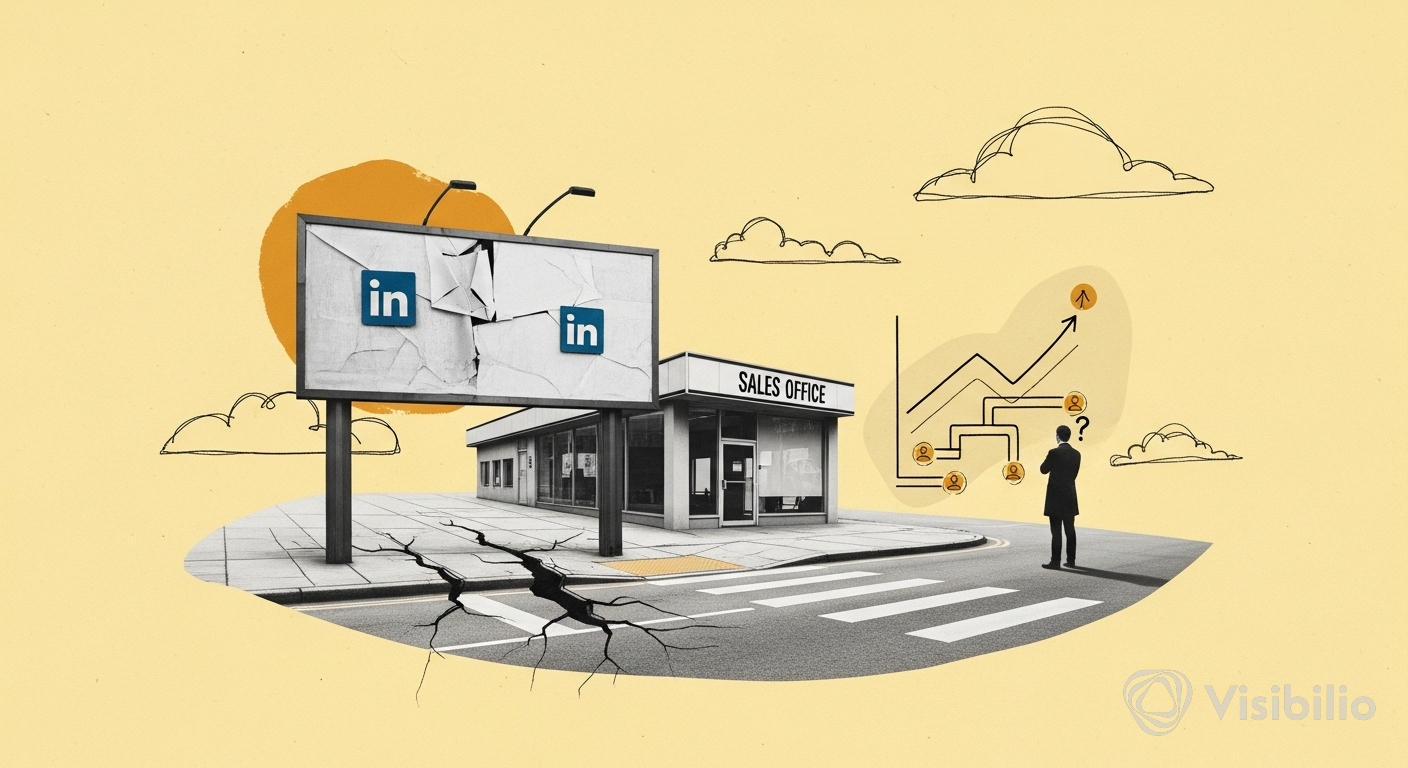
89% of B2B marketers say LinkedIn works for lead generation, according to HubSpot. But when GTM 8020 tracked actual pipeline influence, LinkedIn Ads touched only 35% of closed-won deals. That gap between "works for leads" and "drives revenue" is where most LinkedIn budgets quietly bleed out.
The problem isn't the channel. It's the operating model. Most teams run LinkedIn like a lead-gen vending machine: broad targeting, gated PDF, CPL dashboard, done. Then they wonder why Sales ignores the handoff.
Why This Matters Right Now
LinkedIn's own 2024 benchmark report showed 68% of senior marketers expected budgets to grow. More money flowing into the same CPL-first playbook means more expensive leads that don't convert. If you're a marketing ops pro trying to prove channel ROI to a CFO who's reading pipeline reports (not lead reports), the measurement gap will catch up with you.
The fix isn't complicated, but it does require rewiring how you architect campaigns, what you measure, and how you talk to Sales about it.
Step 1: Split Campaigns by ICP and Buying Role, Not by "Cold vs. Warm"
Most LinkedIn account structures lump audiences into prospecting and retargeting buckets. That's a start, but it collapses the buying committee into a single blob. A VP of Engineering and a Director of Procurement don't respond to the same message, even if they're at the same company.
Setup: Create separate campaigns per ICP segment, then layer in job function and seniority to isolate buying roles. Use LinkedIn's firmographic filters (company size, industry, growth rate) as the first cut, then narrow by title and skills. If you've got your Insight Tag firing and enough traffic, use Matched Audiences to retarget by page visit or content engagement rather than relying solely on LinkedIn's in-platform signals.
Trade-off: This fragments your audience and reduces per-campaign volume. Your CPL will likely go up before pipeline quality improves. That's the right trade-off, but set expectations with leadership before you launch.
Step 2: Match Ad Format to Funnel Stage (Not to What's Easiest)
Single image and video ads work for cold attention. Carousels are strong for comparison and storytelling at mid-funnel. Document Ads let prospects preview gated assets in-feed before committing, which filters for real intent rather than casual clicks. Conversation Ads and Message Ads push toward demos and meetings, but only after you've built enough familiarity that a DM doesn't feel like spam.
The sequencing matters more than any individual format. A prospect who saw a 30-second video explaining the problem, then got retargeted with a Document Ad containing a relevant case study, then received a Conversation Ad offering a 15-minute diagnostic call is a fundamentally different lead than someone who clicked a generic whitepaper.
Guardrail: Watch for creative fatigue. If frequency exceeds 4–5 impressions per user with no engagement lift, rotate creative. Don't just swap the image; change the angle.
Step 3: Measure Pipeline Influence, Not Platform Metrics
Here's where most teams fall apart. LinkedIn Campaign Manager will happily show you CTR, CPL, and conversion rates. None of those tell you whether the leads progressed to SQL or influenced a deal.
What to measure: MQL-to-SQL conversion rate by campaign. SQL-to-opportunity rate. LinkedIn-influenced pipeline value (deals where at least one contact had a LinkedIn ad touchpoint before entering the opportunity). Benchmark timing data from 2025 reports shows Q1–Q2 MQLs converted to SQOs in 24–45 days, while Q4 was slower at 62–68 days. Build your attribution windows accordingly; a 7-day window will miss most of LinkedIn's influence.
What not to over-interpret: Platform-reported conversions and last-click attribution. LinkedIn influence is not the same as incremental lift. Where possible, run holdout tests or geo-matched experiments to get closer to true incrementality. Directional, not definitive, but far better than taking Campaign Manager at face value.
Success = LinkedIn-influenced pipeline value growing quarter over quarter. Guardrails = MQL-to-SQL rate stays above your baseline (if it drops below 15%, diagnose targeting before scaling). Stop-loss = If after 60 days and two creative rotations you see zero SQL progression from a campaign segment, kill it and reallocate.
The Hypothesis You Should Be Testing
If we segment LinkedIn campaigns by buying committee role and sequence formats across funnel stages, then MQL-to-SQL conversion rate will increase by 20%+ over 90 days, because prospects receive stage-appropriate messaging that builds familiarity before asking for a meeting.
That's falsifiable. It gives you a timeline, a metric, and a mechanism. If it doesn't work, you've learned something real instead of staring at a CPL dashboard wondering why Sales isn't calling your leads back.
The teams that treat LinkedIn as a pipeline channel (not a lead channel) tend to discover something uncomfortable first: their volume drops. Fewer form fills, fewer names in the CRM. But the names that do come through arrive warmer, convert faster, and don't rot in a nurture sequence for six months. That 35% closed-won influence number from GTM 8020 didn't come from teams optimizing for the cheapest click. It came from teams willing to spend more per lead to get the right ones.


