
Ninety-six percent of B2B marketers now use AI in their roles. That's not a typo. According to Demand Gen Report's 2026 research, we've essentially reached universal adoption. And yet, here's the punchline nobody's laughing at: fewer than 40% report that AI is actually improving their performance.
Let that sink in. We've collectively spent billions on AI tools, and most of us are running on a treadmill that looks impressive but isn't getting us anywhere faster.
The Gap Between Adoption and Advantage
I've been in marketing long enough to remember when "digital transformation" was the phrase that launched a thousand PowerPoint decks. AI is following the same trajectory, except the hype cycle is compressed into months instead of years. HubSpot's 2026 State of Marketing Report puts it bluntly: 61% of marketers believe we're experiencing the biggest disruption in 20 years. They're right. But disruption without direction is just chaos with better branding.
The numbers tell a story of two camps. Salesforce's research shows that sales teams using AI saw 83% revenue growth compared to 66% for those who weren't. That's a 17-point gap. Meanwhile, Omnibound's 2026 analysis reveals that only 6-30% of marketing organizations have fully integrated AI across their workflows. The rest are dabbling, experimenting, or worse, checking a box.
The real competitive advantage isn't having AI. It's using it well.
Where the ROI Actually Lives
Here's what the data actually shows about where AI delivers returns. Sopro's research found that AI cuts campaign launch times by 75% while boosting click-through rates by 47% and ROI by up to 30%. That's not incremental improvement; that's a different operating model.
But the gains aren't evenly distributed across use cases. MarketScale's analysis of the Content Marketing Institute data found that B2B teams running AI-assisted SDR and content workflows cut their cost-per-lead by 38% and booked more meetings per rep. Notice what's working: distribution and follow-up, not content generation. The teams winning with AI are using it to get the right message to the right person at the right time, not to flood the zone with more mediocre content.
Revenue Memo's comprehensive analysis puts the financial case in stark terms: companies earn an average of $5.44 for every dollar spent on marketing automation, with 76% seeing positive ROI within the first year. The payback period is measured in months, not years.
The Personalization Promise (and Its Limits)
Every vendor pitch deck promises "personalization at scale." The reality is messier. Headley Media's compilation of 2026 statistics reveals that despite near-universal acknowledgment of personalization's value, the vast majority of marketers are still doing basic or moderate personalization. Very few have implemented advanced, AI-driven personalization across the full customer journey.
Why? Because personalization requires clean data, and most organizations are still wrestling with scattered or incomplete information. Demand Gen Report found that 18% of marketers cite incomplete data as their single biggest barrier to confident decision-making. You can't personalize what you can't see.
The organizations pulling ahead are the ones who've matched AI with clearer audience strategy, stronger owned channels, and tighter revenue alignment. The tool is only as good as the foundation it sits on.
Strategy Beats Tools (Every Time)
Here's the stat that should be tattooed on every CMO's forearm: according to the CMI data compiled by Headley Media, the biggest driver of improved content results was strategic clarity, not new technology. AI tools were cited as a factor by just over half of respondents, well behind strategic refinement at 81%.
Read that again. Strategy beats tools by a 30-point margin.
This tracks with what I've seen in the field. The teams that are crushing it with AI started by asking better questions: What does our buyer actually need at each stage? Where are we losing deals? What's the real friction in our funnel? Then they applied AI to those specific problems. The teams struggling bought the shiny object first and are now trying to figure out what to do with it.
The Human Element Isn't Going Anywhere
HubSpot's report includes a quote that should be required reading:
Today, more content is generated by AI than by humans. But it's mostly average. Consumers seek human-created content, and will tune out brand and AI-generated content.
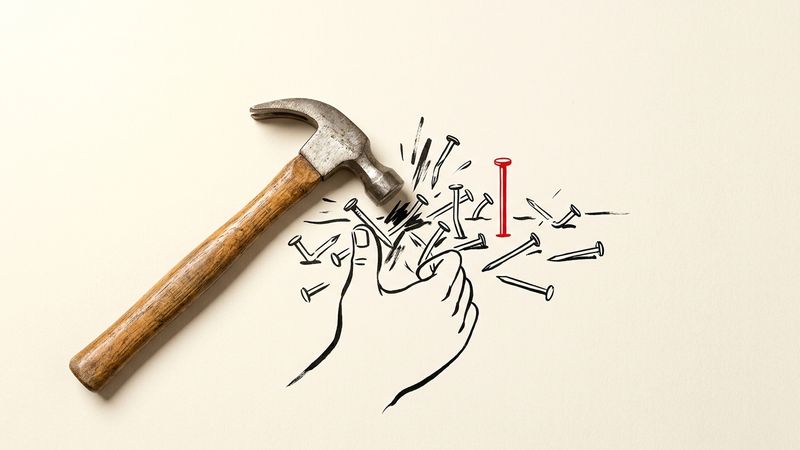
The irony is thick. We've automated ourselves into a sea of sameness. G2's 2026 analysis notes that over 80% of marketers now use AI for content creation. When everyone has the same hammer, everything starts looking like the same nail.
The winners are using AI to handle the operational heavy lifting while doubling down on distinctiveness. LinkedIn's B2B Marketing Insights found that 95% of B2B marketers use AI at least weekly, but only 32% rate their expertise as "extremely good." The skill gap is real, and it's where competitive advantage lives.
What Actually Works in 2026
Based on the data, here's where smart B2B marketing teams are placing their bets:
Workflow efficiency over content volume. Loopex Digital's research shows marketing teams using AI report 44% higher productivity, saving an average of 11 hours per week. That's time back for strategy, creativity, and the human judgment that AI can't replicate.
Predictive analytics for pipeline. Sopro's data indicates predictive AI improves conversion rates by 20-30%. Knowing which accounts are ready to buy is worth more than generating another whitepaper.
Events and owned media. MarketScale's analysis shows that after AI tools (45%), events and experiential marketing (33%) and owned media (32%) are where budgets are increasing. The dual bet on automation and human connection isn't contradictory; it's complementary.
The Real Question
Marketing is like dating, as I've said before. You don't propose on the first ad impression. AI can help you remember every conversation, anticipate what your prospect needs, and show up at the right moment. But it can't replace the genuine connection that closes deals.
The question isn't whether to use AI. That ship has sailed. The question is whether you're using it to become more efficient at being average, or more effective at being distinctive.
The data is clear: 96% adoption, 40% performance improvement. That 56-point gap is where the next generation of B2B marketing leaders will be made. The tools are table stakes. The strategy is the game.


