
Microsoft AI's CEO dropped a prediction last week that should have every CMO's coffee going cold: most professional white-collar work will be fully automated by August 2027. Marketing made his list. So did accounting, legal, and project management.
The day before Suleyman's forecast hit the Financial Times, Jensen Huang stood in the rain at Carnegie Mellon telling 5,800 engineering graduates to consider becoming electricians. A philosopher reviewing a tech journalist's book asked what's left for humans if machines can reason. Three data points, one week, same uncomfortable question landing in our laps.
Here's my take: Suleyman's timeline is aggressive, probably too aggressive. But the question underneath it? That one's already overdue.
The Numbers Nobody Wants to Do Math On
Let's get specific about what "automation exposure" actually means in practice. Goldman Sachs estimated 300 million full-time jobs globally are exposed to AI automation, with two-thirds of U.S. occupations facing some degree of impact. A Bank of America report puts the figure at 24 percent of jobs worldwide, roughly 838 million positions exposed to generative AI.
Those aren't predictions about job elimination. They're predictions about job transformation. The distinction matters, but not in the comforting way most executives want it to.
When , including assistants and recruiters, the press release didn't say "replaced by AI." It said "restructuring." But the pattern is clear: entry-level software engineering jobs are disappearing, executive assistants at professional services firms are being cast aside, and the roles that remain are being redefined faster than job descriptions can be updated.
Tasks vs. Purpose: The Distinction That Saves Your Career
Huang said something at Carnegie Mellon that deserves more attention than his electrician comments: "Many tasks will be automated. Some jobs will disappear. But many new jobs and entire new industries will be created." Then he added the line that should be tattooed on every marketer's forearm: "The task and the purpose of a job are not the same."
I've been in marketing for over two decades. I've watched the industry pivot from print to digital, from broadcast to social, from cookies to whatever privacy-compliant targeting we're calling it this quarter. Every transition had the same pattern: the people who defined themselves by their tasks got displaced. The people who defined themselves by their purpose adapted.
Writing ad copy is a task. Understanding why a particular message resonates with a particular audience at a particular moment in their buying journey? That's purpose. Building a media plan is a task. Knowing when to break the plan because cultural context just shifted? Purpose.
AI is exceptionally good at tasks. It's getting better at them every month. What it cannot do, at least not yet, is hold the strategic frame that makes those tasks meaningful.
What "Human-Level Performance" Actually Means
Suleyman's specific claim was that AI is approaching "human-level performance on most, if not all professional tasks." Notice the word: tasks. Not jobs. Not careers. Not the messy, political, relationship-dependent work of actually getting things done inside organizations.
I can generate a campaign brief with AI in twelve minutes that would have taken my team three hours five years ago. The brief is competent. It hits all the structural requirements. It even sounds like it was written by someone who understands marketing.
But here's what it can't do: it can't read the room in the executive meeting where that brief gets presented. It can't sense that the CFO is skeptical because she got burned on the last brand campaign. It can't adjust the pitch in real-time when the CEO's body language shifts. It can't build the coalition of stakeholders who need to believe in the strategy before it has a chance to work.
Marketing has always been part science, part art, part organizational politics. AI is eating the science. The art and politics remain stubbornly human.
The Real 18-Month Question
Forget whether Suleyman's timeline is accurate. Ask instead: what would you do differently if it were?
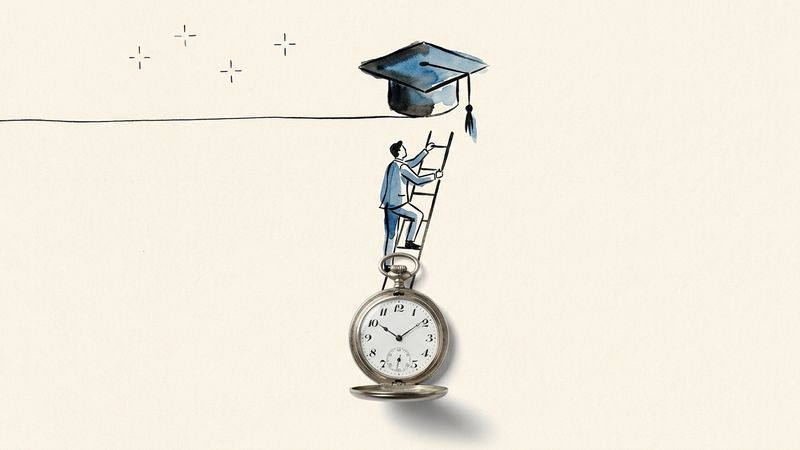
If you knew that 18 months from now, every task-based component of your job could be done by a system, what would you start building today? What relationships would you deepen? What strategic capabilities would you develop? What would you stop doing entirely?
I've been asking this question to CMOs at conferences for the past six months. The answers cluster into three categories.
The first group is in denial. They believe their industry is different, their company is different, their role is different. They're betting that the wave will break before it reaches them. I wouldn't take that bet.
The second group is panicking. They're trying to learn every AI tool, attend every webinar, become the "AI expert" on their team. The problem with this approach is that the tools change faster than anyone can master them. You're running on a treadmill that speeds up every quarter.
The third group is asking better questions. They're not asking "how do I use AI?" They're asking "what problems does my organization have that AI can't solve alone?" They're positioning themselves at the intersection of technology capability and human judgment. They're becoming the translators, the integrators, the people who make the machines useful.
The Trades Metaphor Isn't a Joke
Huang's point about electricians wasn't random. Capital spending from the largest U.S. tech companies could hit $700 billion this year in data center construction alone. Randstad's analysis of 150 million job postings found demand for skilled trades growing three times faster than for professional desk-based roles.
The metaphor extends beyond physical infrastructure. Every AI system needs people who can connect it to reality: to customers, to organizational context, to the messy specifics of implementation. The "trades" of the knowledge economy are the skills that bridge the gap between what AI can generate and what actually works.
For marketers, that means customer intimacy. It means cultural fluency. It means the ability to make judgment calls when the data is ambiguous or the situation is unprecedented. It means being the person in the room who can say "I know the algorithm recommends this, but here's why it's wrong for this audience at this moment."
The Question Behind the Question
The Search Engine Journal piece that sparked this conversation asked the right question in its headline: "What makes you different?"
Not what makes your skills different. Not what makes your experience different. What makes you different.
The answer isn't a skill set. It's something harder to define: judgment, taste, the ability to hold complexity without collapsing it into false simplicity, the willingness to make decisions when the data doesn't give you a clear answer.
I've been doing this long enough to know that every technological disruption creates winners and losers. The winners aren't always the most technically skilled. They're the ones who understand what the technology can't do and position themselves there.
Suleyman might be wrong about 18 months. He might be right. Either way, the question he's forcing us to answer is the one that matters: in a world where machines can do most professional tasks, what's your purpose?
If you don't have a good answer yet, you've got some thinking to do. The clock, whatever its actual duration, is already running.


