
Nine months into 2026, and I'm still processing the implications of Jon Miller's January predictions. If you haven't read his epic 6,600-word essay on Chiefmartec, let me save you some time: the man who co-founded Marketo and essentially wrote the B2B marketing automation playbook is now telling us that playbook is obsolete. And he's probably right.
Here's the uncomfortable truth Miller laid out: your next qualified lead might not be a person. It might be an AI agent doing vendor research on behalf of a buying committee that hasn't even decided they have a problem yet.
The Buying Committee Just Got a New Member
Miller's first prediction hit me like a cold espresso: marketers will begin marketing to agents, not just humans. This isn't science fiction. According to Forrester's 2026 Buyers' Journey Survey, 94% of B2B buyers now use AI during their purchase process, up from 89% the prior year. More striking: AI answer engines have become the number one vendor research source, outranking websites, sales reps, and product experts.
Think about that for a second. The carefully crafted landing page you A/B tested for six weeks? A bot might be summarizing it for a procurement manager who will never see your brand colors.
Miller frames this as treating AI agents as members of the buying committee. Scott Brinker calls it "from martech to marketing to tech." Whatever you call it, it means building two parallel content architectures: branded experiences for humans who still sign contracts, and structured data feeds for the machines doing the initial filtering.
The practical implication is a bit like preparing for a job interview where you know the first round is with a robot. You still need to impress the humans eventually, but if you can't get past the algorithm, you'll never get the chance.
The SaaS Apocalypse That Isn't (Yet)
If you've spent any time on LinkedIn this year, you've seen the hot takes: "SaaS is dead." Miller's response is more measured, and frankly more useful. His prediction: AI will completely transform legacy SaaS martech, but not in 2026.
Why the delay? Miller points to Martec's Law, the observation that technology changes faster than organizations can absorb it. Enterprises move cautiously. The compliance, governance, and integration infrastructure that SaaS platforms provide took years to build. AI hallucinations still make autonomous operation risky for mission-critical activities.
What we're seeing instead is hybrid experimentation. Your marketing automation platform isn't going anywhere this year, but you're probably layering AI workflow tools on top of it. As Karin Pindle noted on LinkedIn, you can't toss out your MAP yet, but you should be using it in combination with native AI features and workflow engines like Zapier to automate far more than email sends.
Miller predicts less than 20% of organizations will adopt composable stacks in 2026, with mainstream adoption coming by 2030. That's a five-year runway, which in AI time feels like an eternity, but in enterprise procurement cycles is actually pretty aggressive.
From Rules to Reasoning
Here's where Miller's predictions get genuinely exciting. For years, marketing automation has operated on brittle, rules-based logic. If title contains "VP," add 10 points. If they open an email, wait two days, send another. These systems can't adapt to the messy reality of non-linear B2B purchases.
Miller predicts reasoning AI will begin replacing this rules-based automation. Instead of if-then logic, marketers provide strategic guardrails and goals. The AI determines the best path for each buyer.
He calls this "AI Playlists," a term I love because it captures the shift from rigid programs to dynamic sequencing. Instead of selecting a single "next-best-action," the AI curates a sequence of actions tailored to each account's signals and context. This is the decades-old promise of 1:1 personalization finally becoming technically feasible.
The catch? Miller emphasizes that human-in-the-loop will remain essential across nearly all implementations. We're not handing the keys to the robots. We're teaching them to drive while we navigate.
Email Becomes Earned Media
Miller's seventh prediction might be the most consequential for demand gen teams: AI inbox gatekeepers will turn email marketing into earned media.
The logic is straightforward. As AI assistants increasingly filter and summarize incoming messages, getting through to a human inbox becomes less about deliverability metrics and more about whether your content is valuable enough to survive algorithmic triage. Your email doesn't just need to avoid spam filters; it needs to convince an AI that it's worth surfacing.
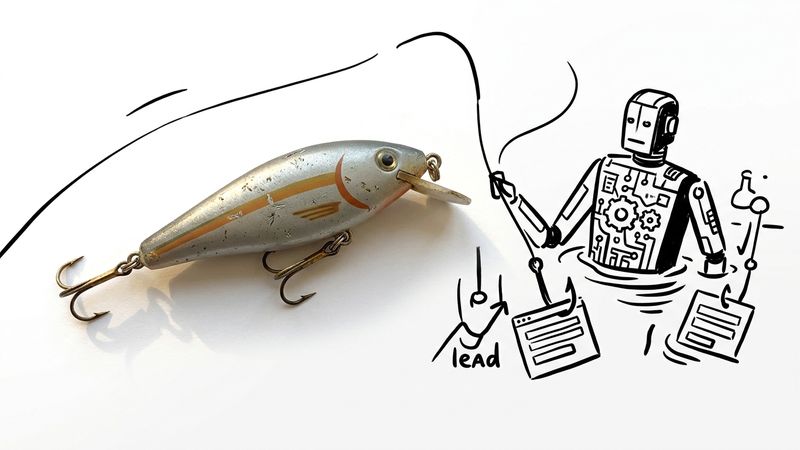
This shifts email from an owned channel to something closer to earned media. You're not just competing with other vendors for attention; you're competing for algorithmic permission to reach the human at all.
The Antidote to AI Slop
Miller's eighth prediction resonates with anyone who's watched their LinkedIn feed fill with obviously AI-generated content: taste, trust, and accountability will become the antidote to AI slop.
When everyone can generate content at scale, the differentiator becomes judgment. Which ideas are worth pursuing? Which angles are genuinely insightful versus merely plausible? Miller argues that human curation, editorial voice, and authentic thought leadership will matter more, not less, as AI makes content production trivially easy.
This is good news for marketers who've invested in building genuine expertise and relationships. It's bad news for anyone hoping AI would let them skip the hard work of actually having something interesting to say.
The Intent Signal Arms Race
Miller's ninth prediction addresses a dynamic I've been watching closely: public intent signals will commoditize, while proprietary signals generate "alpha."
When everyone has access to the same third-party intent data, that data stops being a competitive advantage. The edge comes from signals you own: first-party engagement data, community interactions, product usage patterns, the conversations happening in your own ecosystem.
This is why Miller emphasizes agent deanonymization as an emerging capability. If AI agents are visiting your site on behalf of potential buyers, identifying and tracking those visits becomes a new source of proprietary signal.
What Actually Matters in September 2026
Nine months into the year Miller predicted, how are his forecasts holding up?
The AI-mediated buying journey is clearly real. Semrush's survey of 600+ B2B professionals found 92% say AI has shaped their vendor shortlist, with 45% saying it did so significantly. 6sense data shows 95% of deals are won by vendors already on the buyer's Day One shortlist, formed before any seller contact.
The hybrid experimentation Miller predicted is happening. Most organizations are layering AI capabilities onto existing stacks rather than ripping and replacing. The wholesale transformation is coming, but it's a multi-year journey, not a 2026 event.
The human elements Miller emphasized, taste, trust, relationships, remain stubbornly important. Buyers may use AI to build shortlists, but they still validate through peer networks and human judgment before signing contracts.
Miller closed his predictions with a quote from Nicolas de Kouchkovsky:
"2026 won't be predicted as much as navigated. The ground is shifting faster than teams can make confident forecasts."
That's the real takeaway. The specific predictions matter less than the mindset: stay curious, experiment constantly, and accept that the playbook you're writing today will need revision by next quarter. Marketing has always been part art, part science. Now it's also part AI whispering. The CMOs who thrive will be the ones who learn to conduct all three.


