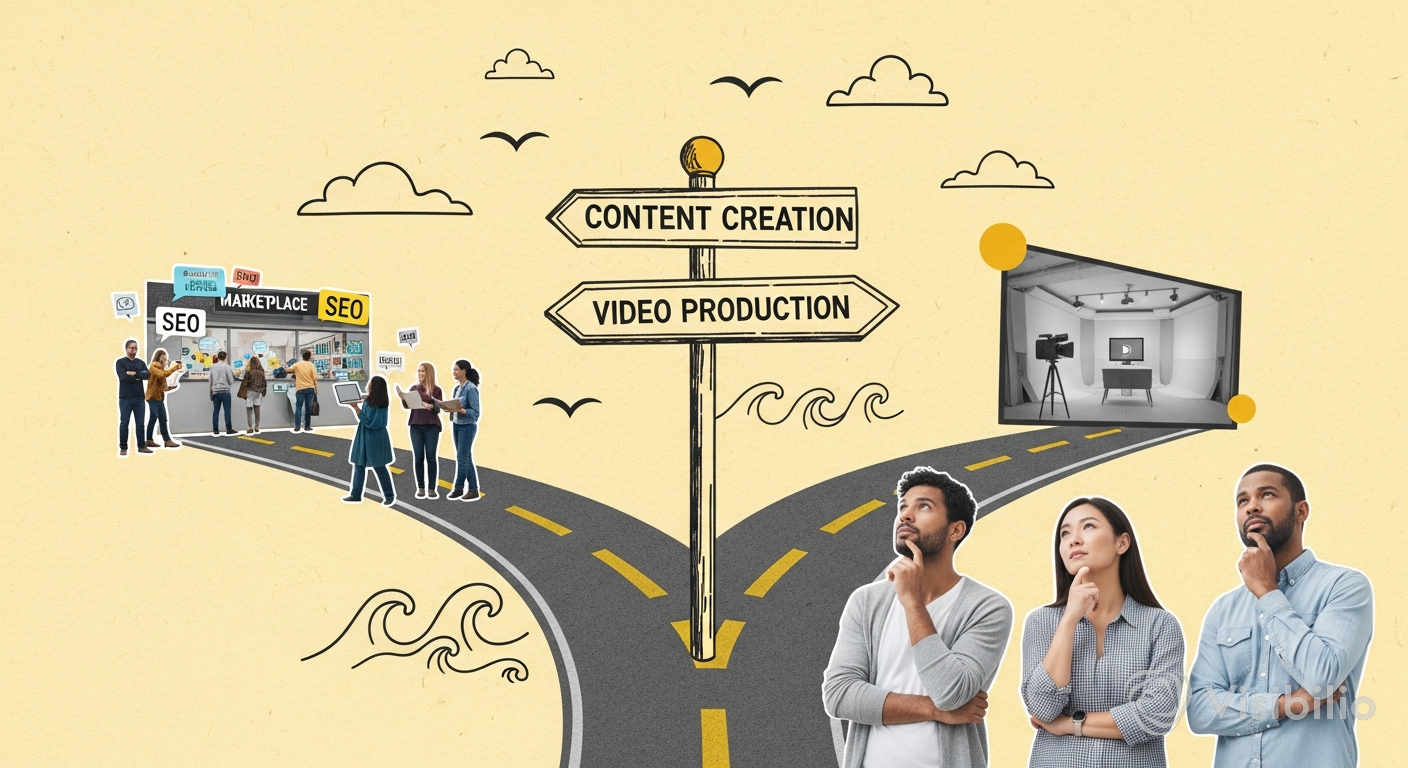
Seventy percent of marketers say content marketing and SEO are top performers. Only 37% plan to spend more on them. Meanwhile, video ranks 7th in effectiveness at 21% and leads all channels in planned budget increases at 51%. That gap between what works and where money flows tells you almost everything about how teams actually make channel decisions.
The disconnect isn't stupidity. It's a category error. Most marketing orgs treat every channel with the same investment logic, when channels actually fall into two fundamentally different buckets.
The Two Buckets: Infrastructure vs. Investment
Some channels are infrastructure. Email (87% adoption), content marketing (86%), organic social (83%). Nearly everyone runs them. They're table stakes. You don't win by being present on these channels; you lose by being absent. The correct posture here is broad coverage with disciplined execution. Maintain quality, keep the engine running, don't starve them of content. But pouring incremental budget into infrastructure channels rarely moves pipeline in a step-change way.
Then there are investment channels. Paid media, events, video, emerging discovery surfaces like AI search. These reward concentrated commitment. Half-funding a paid program or dabbling in events produces noise, not signal. The math only works when you commit enough budget and operational focus to break through and actually measure lift.
The mistake is treating investment channels with an infrastructure mindset (thin spend across many) or treating infrastructure channels with an investment mindset (dumping budget into email hoping for a breakthrough). Both waste money.
Why the Spend Gap Exists (and When It's Rational)
That video-vs-content spend gap looks irrational at first glance. But there's a version of this that makes sense: video may be funded for brand-building or future demand creation even when short-term effectiveness metrics lag. Content and SEO, on the other hand, are already deeply adopted. The incremental dollar there faces diminishing returns unless the team has a documented strategy and real orchestration behind it.
Organizations with documented strategies generate 3x more leads per dollar spent than those without. That stat matters more than any channel ranking. Execution quality can equalize outcomes across digital and traditional channels when the strategy is explicit and the measurement plan is real. The channel itself is less decisive than most teams assume.
The trade-off is clear: breadth without a strategy doc is just presence. Commitment without a measurement plan is just hope.
The AI Discovery Wrinkle
AI search referral traffic from ChatGPT, Perplexity, and Microsoft Copilot grew 340% year over year. Still small in absolute terms (about 3% of total traffic), but the trajectory changes how content earns demand. Teams expecting organic traffic to hold steady are likely wrong. Projections suggest 18–47% lower organic traffic as AI Overviews answer queries directly, creating zero-click results.
Sixty percent of B2B buyers already use ChatGPT for research. That means content strategy now has to optimize for two surfaces: traditional search and AI-driven discovery (sometimes called GEO or Answer Engine Optimization). Being present on sites AI frequently cites, like Reddit and Quora, matters in ways it didn't two years ago. Reputation and authority graphs across reviews, social profiles, and third-party mentions increasingly influence which brands AI recommends.
This shifts content from a pure infrastructure channel toward something that also requires investment-level commitment. You can't just publish and hope Google indexes it. You need to instrument attribution for AI referrals and adapt content formats so AI systems can parse and cite them.
How to Diagnose Your Own Channel Mix
B2B buyers interact with 15–20 touchpoints before a deal closes. You can't cover all of them deeply. The operational question is: which channels get infrastructure-level maintenance, and which get investment-level commitment this quarter?
A starting diagnostic:
- Infrastructure channels (email, organic social, baseline content): Are they running consistently? Is quality stable? If yes, hold spend. Don't chase incremental gains here without a specific hypothesis.
- Investment channels (paid, events, video, AI discovery): Pick one or two. Fund them enough to measure lift with a holdout or incrementality test. Set a stop-loss threshold before launch.
- Strategy doc check: Is the channel plan written down with owners, metrics, and guardrails? If not, fix that first. The 3x leads-per-dollar advantage from documented strategies is the single highest-leverage move available.
For early-stage or lean teams, the advice is even simpler: maximize one owned channel (usually the website) and one paid channel at a time, based on where the ICP actually spends time. Breadth comes later, after you've proven the unit economics on a narrow front.
The Uncomfortable Part
Most teams spread budget across channels because it feels safer. Cutting a channel entirely triggers organizational anxiety. But the data keeps pointing the same direction: broad, undifferentiated presence generates activity metrics, not pipeline. Concentrated commitment in two or three channels, backed by a documented strategy and real measurement, generates revenue.
That 70%-effective, 37%-funded gap in content marketing? It's not a market failure. It's teams recognizing, maybe unconsciously, that content is infrastructure they already run. The real question they should be asking isn't "should we spend more on content" but "do we have a written strategy that makes our existing content spend 3x more productive." Most don't. And that's where the money actually is.


