
Eighty percent of B2B deals are won by the vendor the buyer preferred before first contact with any seller. That's not a typo. According to 6sense's 2025 Buyer Experience Report, the game is essentially over before your SDR even picks up the phone.
If that stat doesn't make you question your entire campaign calendar, I don't know what will.
Here's the uncomfortable truth: the campaign model most of us grew up with was built for a buyer who no longer exists. That buyer had a single decision-maker, a linear journey, and the patience to sit through your seven-touch nurture sequence. Today's B2B buying committee? It's a sprawling organism of 11 to 14 internal stakeholders on complex purchases, according to Forrester's 2026 data. They're moving across roles and stages on their own timeline, consuming 13.4 pieces of content before they ever raise a hand.
The strategies most teams are still running can't keep up. And the gap between marketing activity and actual revenue is widening.
The Campaign Model's Quiet Collapse
Let me paint a picture you'll recognize. Marketing celebrates hitting MQL targets. Sales complains the leads are garbage. Three months later, pipeline coverage is thin, and everyone's pointing fingers. Sound familiar?
The problem isn't effort. It's architecture.
Traditional campaigns treat buyers as individuals moving through a neat funnel. But Intentsify's research shows that 86% of B2B purchases stall during the buying process, and 81% of buyers end up dissatisfied with their chosen provider. That's not a product problem. That's a context problem.
As NVIDIA's Ari Capogeannis put it bluntly in a recent webinar:
MQLs are "the bane of our existence."
Ari Capogeannis, NVIDIA
We're tossing leads over the fence based on what he called a "dungeons and dragons era style point scoring system." Marketing sees engagement data from their martech stack. Sales operates from CRM data in their own silo. Neither has the complete picture of account relationships.
The result? Companies that achieve 100% of their MQL goal often only hit around 30% of their pipeline goal. That's not a rounding error. That's a structural failure.
What Experience Orchestration Actually Looks Like
The shift from campaign management to experience orchestration isn't just a rebrand. It's a fundamental rethinking of how we engage buying committees.
Think of it this way: marketing is like being a DJ at a wedding. You've got to read the room, know when to drop a classic, and when to sneak in something experimental that no one asked for but everyone ends up loving. The difference is that now the wedding has 13 guests who all have different music preferences, and they're all deciding together whether to stay or leave.
Experience orchestration means moving from "what campaign should we run?" to "what does this buying group need at this moment?" It requires understanding that buyers complete roughly 70% of their research anonymously before they ever talk to sales, according to Forrester's 2024 data. By the time they raise a hand, they've already formed preferences.
Adobe's 2026 AI and Digital Trends report reveals that over half of B2B organizations expect agentic AI to coordinate sales, marketing, and service journeys in real time. But here's the catch: only 41% say they have a unified customer data foundation that can support AI at scale. We're building race cars without engines.
The Personalization Gap Nobody Wants to Admit
Real-time personalization sounds great in vendor demos. In practice, most organizations are still stitching together disconnected tools and hoping for the best.
StackAdapt's 2026 research found that 99% of agencies say personalization directly drives client revenue growth. Yet 77% of agency marketers say quantifying and communicating results of personalized marketing campaigns remains a challenge. We know it works. We just can't prove it.
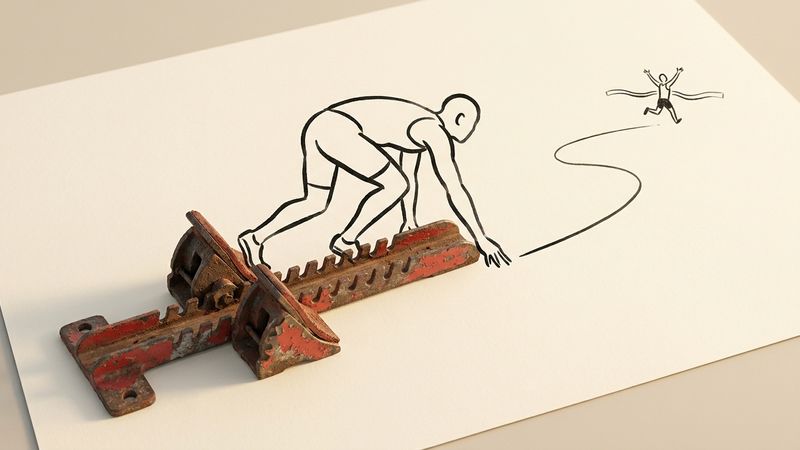
The gap isn't technological. It's organizational. Adobe's report cites that 72% of B2B organizations point to skills gaps as a major barrier to deploying agentic AI effectively. We've bought the tools. We haven't trained the people.
And here's where it gets interesting: OneMagnify's analysis shows that today's decision-makers, increasingly Millennials and Gen Z stepping into leadership roles, expect consumer-grade experiences in B2B interactions. They're comparing your portal to every great digital product they use, not just your competitors. If your website feels like it was designed in 2019, you've already lost credibility before the conversation starts.
Building the Internal Case for Change
Let's not get seduced by shiny object syndrome. The path from campaigns to experience orchestration isn't a technology purchase. It's a change management exercise.
Start with the gaps you can actually see. Where are deals stalling? Which buying committee roles are you consistently missing? What content are prospects consuming before they ghost you?
Gartner's 2024-2025 data shows that 74% of buying teams experience unhealthy conflict during the purchase process. When committees do reach consensus, they're 2.5x more likely to call the outcome a high-quality decision. Your job isn't just to persuade. It's to help them align.
That means building content and experiences for each role in the buying group, not just the champion. It means tracking buying group completeness as a pipeline metric, not just lead volume. It means accepting that sellers get only about 17% of buyer time during the entire purchase process. Your enablement has to work when you're not in the room.
The Sequenced Roadmap
Here's a realistic path forward, because "boil the ocean" isn't a strategy:
Phase one: Audit your current demand gen approach for personalization gaps. Where are you treating a 13-person buying committee like a single lead? Where are you scoring individuals when you should be measuring account engagement?
Phase two: Build role-based content that addresses the specific concerns of each buying committee member. Finance cares about ROI and risk. IT cares about integration and security. End users care about usability. Stop sending everyone the same nurture track.
Phase three: Implement propensity modeling that goes beyond simple intent data. NVIDIA's approach measures four distinct types: propensity to engage, propensity to buy, propensity to buy again, and propensity to churn. Early intent signals should trigger marketing nurture, not sales handoffs.
Phase four: Create feedback loops between marketing and sales that actually function. The definition of an MQL shouldn't change quarter to quarter based on who's yelling loudest.
The Revenue Connection
Data tells you the what, but brand tells you the why. The organizations pulling ahead aren't just adopting tools. They're building AI readiness into their operating model.
B2B teams running AI-assisted SDR workflows report a 38% reduction in cost-per-lead and 2.4x more meetings booked per rep. Programs running unified intent and ABM stacks reduced average sales cycle by 17 days year-over-year. The math is compelling.
But the math only works if you've done the foundational work. Connected data. Skilled teams. Clear frameworks for measuring returns. Without those, you're just automating broken systems faster.
The campaign model isn't dead. It's just insufficient. The buyers who matter most have already formed their preferences before you know they exist. The question isn't whether to shift from campaigns to experience orchestration. It's whether you'll make that shift before your competitors do.
If marketing was a video game, this is just Level 2 unlocked. New boss fight, same mission: connect the dots between what you do and the revenue it generates. The buying committee is waiting. They've already started without you.


