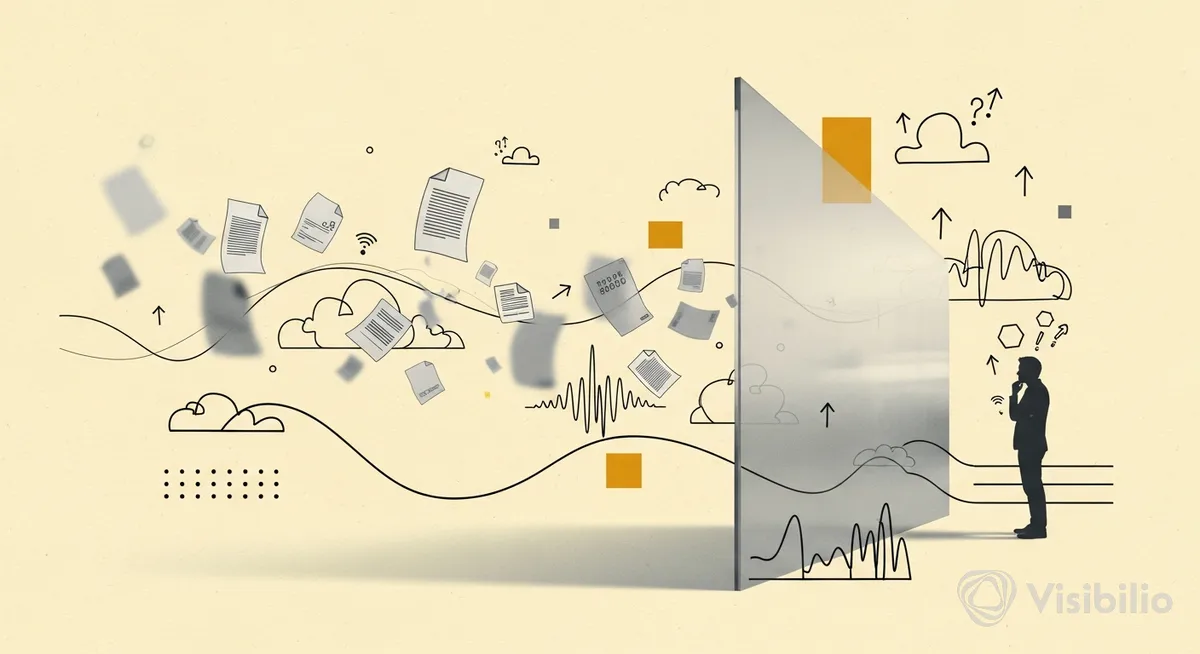
Claude's shared chat pages started appearing in Google search results over the weekend of July 26, 2026. Medical records, internal company documents, and files containing names and phone numbers of children were exposed. The pages carried an X-Robots-Tag header set to none, which should have instructed Google to keep them out of the index. However, Google never read it.
The issue stems from a misconfiguration affecting more teams than expected: Anthropic's robots.txt file disallows the /share/* path for all user agents, preventing Googlebot from crawling those URLs. If Googlebot can't crawl the page, it can't see the noindex directive. The two controls cancel each other out.
The Conflict, Step by Step
Matt G. Southern at Search Engine Journal confirmed the setup on July 27. The robots.txt on claude.ai blocks /share/* under the User-agent: * group, with no separate Googlebot group. A live share URL returns the header x-robots-tag: none on a GET request. The same header appears when the request identifies as Googlebot, with a Vary: User-Agent response.
Independent IT consultant Daniel J. Glover flagged the same conflict a day earlier, on July 26.
Google's documentation is clear: a noindex tag only works if the crawler can access and read the page. If a page is blocked by robots.txt but other pages link to it, Google can still index the URL, noting the address without opening it. John Mueller has explained this repeatedly, and Martin Splitt has recommended against placing both controls on the same page.
So Anthropic had the right idea (noindex) but the wrong execution (robots.txt block). The noindex was present; it was just invisible to the entity that needed to see it.
Three AI Companies, Same Mistake
This isn't an Anthropic-only problem. OpenAI pulled shared ChatGPT chats from search in August 2025, and Google blocked Bard transcripts from indexing in 2023. Three companies, three rounds of customer chats surfacing in search results, and three variations of the same underlying confusion between crawl control and index control.
The distinction matters: Robots.txt controls crawling: whether a bot can fetch a page. Noindex controls indexing: whether a fetched page appears in search results. Canonical controls deduplication: which version of similar pages gets preferred. These are different levers. Using one when you need another doesn't just fail quietly; it can create the exact outcome you were trying to prevent.
Why This Is a GTM Operations Problem
If you're running a B2B SaaS team, this pattern should raise alarms beyond the SEO desk. Your team shares Claude and ChatGPT conversations constantly—competitive analyses, campaign briefs, pipeline models, API keys, and internal benchmarks. Every shared link creates a publicly accessible URL. A URL alone is not access control.
Anthropic spokeswoman Amie Rotherham told TechCrunch that share links "are not guessable or discoverable unless people choose to share them themselves." That's technically true but practically irrelevant. Someone pastes a link in a public Slack channel, a forum post, or a blog comment. The link gets crawled, and the page gets indexed. Now your internal pricing model or API key is in Google's index.
Google spokesperson Ned Adriance stated plainly that search engines don't determine which pages are made public. Google provides site owners with crawling and indexing controls and follows them. The responsibility lies with whoever configured those controls.
The Operational Fix
For your properties, the diagnostic is simple. If you want a page accessible to users but invisible to search, serve a noindex tag (meta or X-Robots-Tag header) and don't block the URL in robots.txt. Googlebot needs to crawl the page to read the noindex. Blocking crawl access defeats the purpose.
For shared AI chats, the calculus is different because you don't control the platform's crawl configuration. In Claude: Settings > Privacy > Shared Chats shows everything you've shared. Unsharing disables the direct link. However, removing a URL from Google is a separate process managed by Anthropic, not you. Artifacts published inside Claude require a separate unpublish action.
The trade-off when sharing any AI chat via link is treating it as a public webpage from the moment you click "share." If the content wouldn't survive being indexed, don't create the link.
The Deeper Pattern
Three AI companies have now repeated the same error. This isn't coincidence; it's a systemic misunderstanding of how crawl directives interact with index directives. The blast radius keeps growing as teams share more sensitive material through AI tools every quarter.
The fix for your sites is technical and straightforward. The fix for shared AI content is behavioral: treat every share link as public, because that's what it is. Robots.txt won't save you, and the noindex that nobody can read won't save you either.


