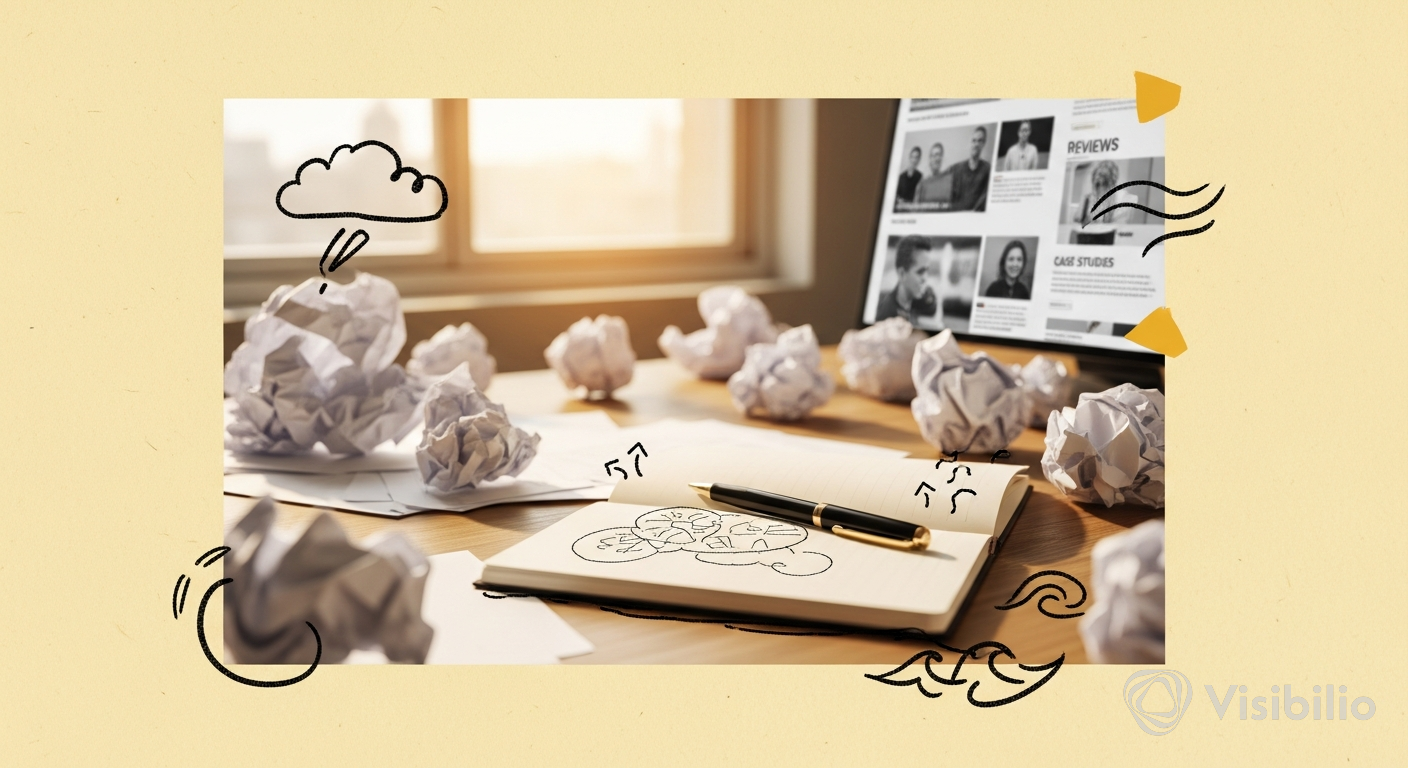
56% of B2B SaaS brands now prioritize reviews and case studies for AI visibility. Not the 5,000-word keyword-stuffed ultimate guides that dominated SEO for a decade. The shift isn't subtle, and if your content calendar still revolves around ranking pillar pages for clicks, the measurement problem you're about to hit is worse than declining traffic.
The problem with "ultimate" anything
Traditional SEO content was built to rank: stuff a page with enough keywords, internal links, and word count, then wait for Google to reward you with clicks. The ultimate guide format worked because search engines rewarded comprehensiveness. AI search systems don't.
When a buyer asks Claude or ChatGPT "what's the best marketing automation tool for a 200-person SaaS company with Salesforce integration," the AI doesn't send them to your 7,000-word guide. It synthesizes an answer from structured, specific, externally validated sources. Your guide might get referenced if a single paragraph happens to answer the exact question cleanly. The other 6,800 words? Invisible.
This is the core shift: from ranking for clicks to shaping the answer. The industry calls it Generative Engine Optimization (GEO), and it changes what content ops teams should be building.
What AI systems actually pull from
The data here points in a clear direction. Among B2B SaaS brands actively optimizing for AI visibility, 42% are prioritizing how-to and what-is content, 34% comparison pages, and 32% thought leadership. But the biggest category (56%) is reviews and case studies. That's not a coincidence.
AI models with web search enabled (Claude now does this with citation-backed synthesis) trust external validation heavily. A complete G2 profile with detailed reviews mentioning specific use cases carries more weight than a self-published guide claiming you're the best. Third-party proof isn't optional anymore; it's infrastructure.
The other signal worth paying attention to: 14 respondents in one study credited format and structure changes as their primary AI visibility win. Not new content creation. They restructured existing pages to be question-led, added schema, and made answers extractable. The content already existed. The packaging didn't.
What replaces the guide: structured, question-led pages
The replacement isn't one format. It's a content architecture designed for extraction rather than engagement time on page.
Comparison pages. AI users arrive with well-defined problem statements. They've often already compared vendors before asking the AI to synthesize. A page that directly compares your product against alternatives, with honest trade-offs and specific use-case fit, gives the AI something concrete to cite.
Case studies with constraint-rich detail. "We helped a SaaS company grow" is useless. "We reduced CAC by 31% for a 150-person PLG SaaS company running $400K/month in paid" gives an AI system a fact it can match to a buyer's query. Specificity is the new comprehensiveness.
FAQ and question-led sections. AI search users ask long, constraint-rich questions. Content structured as direct answers to those questions, with clear headers and scannable sections, gets extracted. Paragraphs buried in a wall of guide text don't.
The ops angle: treat AI search as a distinct channel
For marketing ops, this means measurement changes. AI-referred traffic behaves differently. The user may have already made a shortlist decision before arriving. Attribution models built for organic search don't map cleanly.
The practical move: ensure GA4 is capturing AI-referred traffic as its own segment. Build a schema deployment process that's repeatable, not a one-off rewrite project. And here's the uncomfortable part for teams that just invested in a content refresh: roughly 80% of execution work here is automatable (drafting structured answers, expanding FAQ sections, deploying schema). The 20% that can't be automated is the strategic layer: deciding which questions to answer, what positioning to take, and which trade-offs to make explicit.
That 80/20 split matters because it determines staffing and workflow design. Automate the formatting. Keep humans on the positioning.
The hypothesis (make it falsifiable): if you restructure your top 10 pages into question-led, schema-marked, comparison-friendly formats, then AI citation frequency for your brand will increase within 90 days, because AI systems preferentially extract structured, externally validated content over long-form guides.
Success = increase in AI-referred traffic segment (GA4) and brand mentions in AI-generated answers. Guardrails = organic traffic to restructured pages doesn't drop more than 15%. Stop-loss = if organic drops 20%+ within 60 days, revert and diagnose.
When this is wrong
If your audience still primarily uses traditional search, and your analytics confirm that, don't torch your guides. Some verticals and buyer segments haven't shifted yet. The signal to watch: declining click-through rates on high-ranking pages. When you rank #1 but clicks are falling, AI is eating the visit before it happens.
The 5,000-word ultimate guide isn't dead everywhere. But for B2B SaaS buyers who already live inside AI tools 20 hours a week, the guide was dead before you finished writing it. The content that replaces it is smaller, more specific, and built to be quoted by a machine that never visits your site.