
A bookstore's holiday ad campaign went live with garbled text and a swapped product photo. Nobody on the marketing team had touched either one. Meta's ad AI altered the approved creative after launch, and the team only found out because the photographer whose work got rewritten started fielding messages calling it "AI slop."
That story landed in my feed this week, and I haven't stopped thinking about it. Not because AI made a mistake. Mistakes happen. What got me was the silence that followed. Nobody owned it. The creative was approved, then changed, then live, and somewhere in that sequence, accountability evaporated like morning fog on the Bay.
Here's the uncomfortable truth: AI didn't create this problem. It just turned on the lights in a room where a lot of marketing teams were already fumbling in the dark.
The Crack Between "Approved" and "Live"
Guy Hanson, VP of Customer Engagement at Validity, has been talking with email marketing clients about exactly this gap. His read on the bookstore incident is blunter than most industry commentary:
The tooling made an unrequested, unflagged change to approved assets, but the process also had no verification step to compare the live creative against the approved source after publishing.
Guy Hanson
That second part is the killer. The AI did something unexpected, sure. But the workflow had no checkpoint to catch it. Print production teams have used version locks for decades. What's new is a workflow where the thing most likely to alter your creative without asking is the same system you installed to help you move faster.
Hanson breaks a typical email campaign into three stages: strategy, building, and approval/handoff. AI has colonized the middle stage first, generating subject line variants, copy options, audience segments, send-time recommendations, and image assets. Strategy and final approval are supposed to stay human. In practice, approval increasingly falls "between the cracks."
The size of the organization changes where that crack opens. Enterprise teams have longer approval chains, more vendors and tools, ownership that straddles departments. A mistake can travel through three or four sign-offs without anyone treating it as fully theirs. Smaller teams have the opposite problem: one person often runs the whole campaign, which sounds like clearer ownership until you notice that person is stretched across six platforms and hasn't slept properly since Q3.
The Automation Paradox
Meta has been moving aggressively toward AI-powered automation in recent months. Its Andromeda ad retrieval system has overhauled how ads are matched to users. Advantage+ now spans creative, targeting, and budget optimization. Mark Zuckerberg has laid out a vision where advertising on Meta's platforms will be as simple as inputting a credit card number and a business goal. AI handles the rest.
For marketers, this proliferation of AI features has meant ceding more control to what media buyers call "black-box" systems. As one agency SVP put it:
We're constantly having to go through and play Whac-A-Mole to figure out what's the new thing they didn't tell us about that they've turned on.
Google is moving in the same direction, with Ask Advisor now working across Ads, Analytics, Merchant Center, and Marketing Platform. The promise is efficiency. The reality is that every time a marketing team hands another piece of the funnel to an automated system, somebody stops being the obvious answer to a very old question: Who's responsible for this campaign?
The Accountability Illusion
Here's what I've noticed in conversations with CMOs over the past year: the teams that are struggling with AI accountability are often the same teams that were already struggling with accountability, period. They just had better cover.
Before AI, you could hide behind process. The brief went through three rounds of revisions. Legal signed off. The agency delivered on spec. If something went wrong, there was a paper trail long enough to diffuse blame across a dozen stakeholders. Nobody was responsible because everybody was responsible.
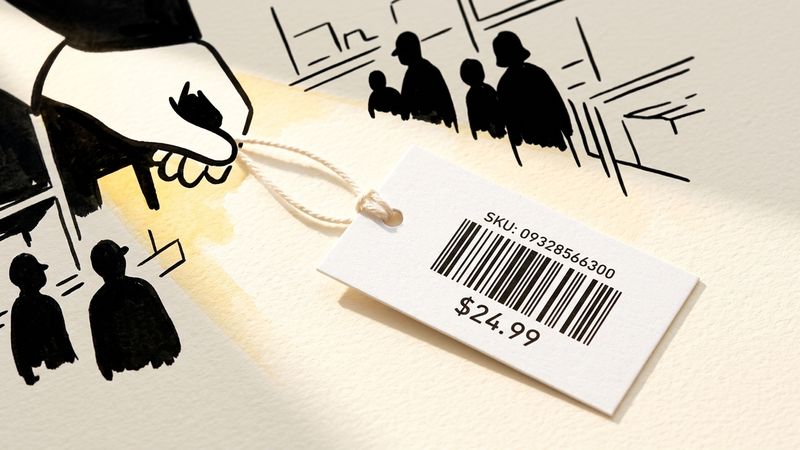
AI collapses that cover. When the system makes a change after approval, there's no committee to blame. There's no vendor to fire. There's just a gap in your workflow that was always there, now visible because the machine walked right through it.
InMarket CMO Natalie Bastian put it well at Cannes this year:
Most organizations still don't have the muscle to act on what AI tells them.
Natalie Bastian
The gap between what AI makes possible and what companies actually do with it was the most important takeaway from the festival. Pilots are over. Everyone is in production phase. But production doesn't mean progress.
What Actually Fixes This
The fix isn't complicated. It's just unglamorous.
Lock creative from automated modification once it's approved. Or run a scheduled audit within 24 hours of launch that checks live assets against the approved files. Neither idea is new. What's new is that we need to apply old-school production discipline to systems that were sold to us as "set it and forget it."
Marketing manager roles are actually growing, not shrinking, even as AI adoption in marketing hit 91% this year. That paradox tells you everything. AI automates execution, not strategy, judgment, or accountability. The bottleneck isn't technology. It's how marketing leadership integrates it without breaking the strategic foundation that humans still own.
The skills gap is widening in a specific direction: marketing managers who can't prompt, audit, or govern AI systems are being outpaced by peers who treat AI as a force multiplier rather than a replacement for their strategic decision-making. The highest-value activities in 2026 are the ones AI can't do: setting positioning strategy, interpreting customer sentiment shifts, managing agency relationships, and making judgment calls when data is ambiguous or incomplete.
The Real Question
Every CMO loves to talk ROI. But let's not forget there's also "Return on Imagination," and right now, we're spending a lot of imagination on tools that promise to think for us while quietly eroding the structures that made us accountable in the first place.
AI is brilliant at giving you the average of the internet. It tells you what has worked before, what sounds correct, what is statistically safe. But it cannot sense when a brand is starting to sound like everyone else. It doesn't have taste. It doesn't challenge a weak brief. It doesn't ask, "Should we even be doing this?"
The bookstore incident wasn't a failure of AI. It was a failure of ownership that AI made impossible to ignore. The photographer noticed. The customers noticed. The only people who didn't notice were the ones who were supposed to be watching.
Marketing is like dating: you don't propose on the first ad impression. But you also don't outsource the relationship to an algorithm and then act surprised when it sends flowers to the wrong address. The machine can help you move faster. It cannot help you care more. And caring, in the end, is what accountability actually means.


