
Someone just filed a copyright complaint claiming your original content is stolen. Google removes your page from search results. Your traffic tanks. And here's the kicker: the complaint is completely fabricated, filed by a shell company that may or may not exist on a remote island near Antarctica.
Welcome to 2026, where the Digital Millennium Copyright Act has become the weapon of choice for bad actors looking to kneecap competitors in search results.
The Playbook Is Embarrassingly Simple
Let me walk you through how this works, because if you're running any kind of content operation, you need to understand the mechanics.
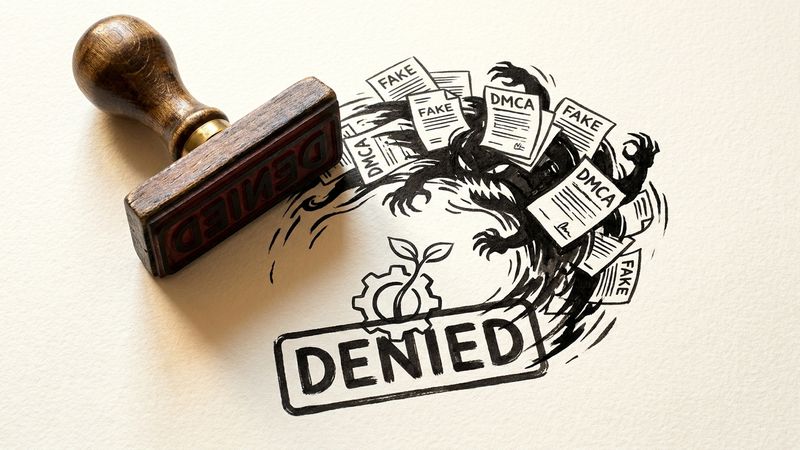
Search Engine Journal recently reported on how Press Gazette, a journalism trade outlet, had two separate investigations removed from Google search after anonymous DMCA complaints. The alleged original content that Press Gazette supposedly copied? In one case, it was a month-old Reddit post about online casinos. In the other, a completely unrelated 2024 article from The Verge. Neither had anything to do with the actual reporting.
The complaint language was boilerplate nonsense: "The infringing news website has blatantly and willfully violated copyright law by copying our entire content word for word." Except, of course, no copying occurred. The articles were entirely original investigations into a company called Clickout Media.
As Search Engine Roundtable documented, this isn't an isolated incident. Search Engine Land, Moz, and countless smaller publishers have all been hit. The pattern is consistent: legitimate content disappears, traffic evaporates, and the victim is left scrambling to file counter-notices while the damage compounds.
Why Google Can't (or Won't) Fix This
Here's where it gets frustrating for anyone who's ever tried to explain marketing ROI to a CFO: the system is working exactly as designed, which is the problem.
Under the DMCA, Google is legally required to act on takedown notices to maintain its safe harbor protection. Google even sued a group of fraudsters in 2023 who had submitted thousands of fake notices targeting over 117,000 URLs. The defendants had created 65 Google accounts to file fraudulent claims, sometimes impersonating Elon Musk and Amazon to add credibility.
Google won that lawsuit. The abuse got worse anyway.
SEO researcher Charles Floate documented how fake law firms now file 20 to 30 takedowns per day using different trading names. One complaint he analyzed came from an Indian law firm claiming a UK Trustpilot profile was infringing on itself. The complaint was filed in Denmark. Google processed it without verification.
The math here is brutal for victims. According to the Copyright Alliance, after you file a counter-notice, the service provider must wait 10 to 14 business days before reinstating your content. If the original complainant files a lawsuit (they won't, because the claim is fake), the content stays down. If they don't, you eventually get reinstated. But eventually can mean weeks of lost traffic, and if attackers compound multiple DMCAs on the same URLs, recovery can stretch to months.
The Asymmetry Problem
This is what makes DMCA abuse such an effective weapon: the cost-benefit ratio is wildly skewed in favor of attackers.
Filing a fake DMCA complaint costs nothing. The forms are publicly available. Google's own DMCA report form requires minimal verification. You can claim to be anyone, representing any company, from any jurisdiction. The worst-case scenario for a fraudster? Google rejects the complaint or reinstates the content later. There's no meaningful penalty for filing false claims at scale.
For the victim, the costs are immediate and concrete: lost organic traffic, damaged rankings, time spent investigating and filing counter-notices, and the reputational risk of having your content flagged as potentially infringing.
SEO expert Joe Youngblood noted that Google Search Console doesn't even reliably report DMCA takedowns. You might not know your content has been removed until you notice the traffic cliff in your analytics. By then, the damage is done.
What This Means for B2B Marketers
If you're running content marketing for a B2B brand, this should concern you for three reasons.
First, your highest-performing content is the most attractive target. That pillar page ranking #1 for your primary keyword? That's exactly what a competitor (or a competitor's shady SEO vendor) would want to remove. The more valuable the page, the more tempting the target.
Second, the counter-notice process requires disclosing your personal information to the complainant. As one webmaster noted on Stack Exchange, you're being asked to reveal your business identity to someone who won't reveal theirs. If the complaint is fake, you're handing your contact details to a bad actor.
Third, Google's transparency report admits the limitation directly: people who submit requests may provide inaccurate information, Google cannot always verify accuracy, and it cannot always notify site owners before content is removed.
Protecting Your Content Operation
There's no silver bullet here, but there are practical steps.
Monitor the Lumen Database for complaints targeting your domain. This is where Google publishes DMCA notices it receives. Set up alerts if possible, or check manually on a regular schedule. The sooner you catch a fraudulent complaint, the sooner you can file a counter-notice.
Document your content creation process. Timestamps, drafts, editorial calendars, author attribution. If you ever need to prove originality, you'll want a paper trail that predates any alleged original content.
Build relationships with your Google Search Console contacts if you have them. Larger publishers like Press Gazette and Moz got their content reinstated quickly because they could escalate. Most of us don't have that luxury, but any direct channel to Google's team is worth cultivating.
Consider legal counsel for high-value content. If a page drives significant revenue, having an attorney ready to respond to fraudulent claims can accelerate the counter-notice process.
And finally, diversify your traffic sources. This is good advice regardless of DMCA risk. If 80% of your leads come from organic search, you're one fraudulent complaint away from a very bad quarter.
The Bigger Picture
What we're watching is a classic platform governance failure. Google built a system optimized for speed and legal compliance, not accuracy. The DMCA's notice-and-takedown framework was designed for a different era, when copyright complaints came from identifiable rights holders with legitimate grievances.
Now we have automated scripts, fake law firms, and shell companies filing thousands of complaints per day. The system can't distinguish between a legitimate copyright holder and someone who registered a domain yesterday to file fraudulent claims.
Google's 2023 lawsuit was supposed to send a message. Instead, it seems to have provided a roadmap. The defendants were in Vietnam, beyond practical enforcement. The abuse continues.
For marketers, the lesson is uncomfortable but clear: your organic search presence is more fragile than you think. The same platform that rewards great content can be gamed by anyone willing to file a form and lie about ownership.
Data tells you the what, but brand tells you the why. And right now, the data is telling us that the DMCA has become a weapon. The why is simple: because Google made it easy, and nobody's stopping them.


