
When Brands Want to Be In and Out of the Closet
Mastercard dropped its Platinum sponsorship of NYC Pride this year. Target scaled back its in-store Pride merchandise to a handful of locations. Garnier, Skyy Vodka, Citi, Nissan, PepsiCo: all drastically reduced or eliminated their public support. And yet, if you visit Mastercard's True Name page right now, you'll find the company still proudly "empowering the LGBTQIA+ community to be their true self." Target's Pride merchandise? Still available online, where it can celebrate inclusion from a safer distance.
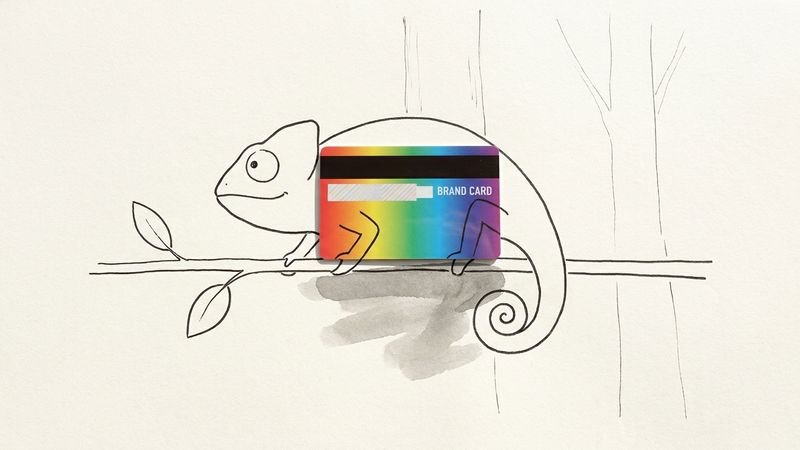
Welcome to Schrödinger's marketing, where brands are simultaneously in and out of the closet depending on who's watching.
The Numbers Tell a Brutal Story
According to MarTech, only 131 Fortune 500 companies participated in the Human Rights Campaign's 2026 Corporate Equality Index, down 65% from 377 the year before. Mintel's 2026 report confirms that NYC Pride saw approximately a 25% drop in corporate sponsorship for 2025 events. Pittsburgh Pride organizers expect to raise only 30-40% of what they got a few years ago. Phoenix Pride declared bankruptcy. Tucson Pride went out of business entirely.
The retreat isn't subtle. Gravity Research's 2025 Pride Pulse Poll found that 39% of companies reduced overall Pride Month engagement in 2025, up from just 9% in 2024. That's not a gradual shift; that's a stampede for the exits.
But here's where it gets interesting for those of us who think about marketing strategy for a living: the same companies fleeing public Pride sponsorships are often still quietly targeting LGBTQ+ consumers through lower-profile channels. The rainbow came down, but the targeting stayed up.
The $1.4 Trillion Elephant in the Room
Let's talk about what these brands are actually walking away from. LGBT Capital estimates that global LGBTQ+ purchasing power sits at approximately $4.7 trillion, with the U.S. community alone wielding $1.4 trillion in annual spending power. GLAAD's Accelerating Acceptance 2025 report notes that 9% of U.S. adults now identify as LGBTQ+, a figure that climbs to nearly a quarter among adults under 30.
This isn't a niche market. If the global LGBTQ+ community were a country, it would represent the fourth-largest economy in the world.
So why are brands treating this audience like a liability rather than an opportunity? The answer, as executives told Gravity Research, is fear of backlash from the current administration and conservative activists. More than 60% of surveyed executives cited pressure from the Trump administration as the primary reason for changing their Pride Month approach.
The Authenticity Paradox
Here's the strategic problem with the "quiet targeting" approach: LGBTQ+ consumers aren't stupid, and they have long memories.
A May 2025 survey by the National LGBT Media Association found that 88% of LGBTQ+ respondents have noticed companies reducing or pausing their LGBTQ+ support. More significantly, 75% indicated they would either stop buying entirely or reduce spending with companies that scale back. And 85% said they actively support competitors who maintain their LGBTQ+ commitments.
"When you get to near 90% on anything, it is reason for concern. These statistics are nothing to laugh at, especially when you consider that the reduction in presence to the LGBTQ+ consumer seems to be just a knee-jerk reaction to a short-term political administration."
Todd Evans, Rivendell
Meanwhile, GLAAD's research shows that 70% of all Americans say knowing a brand offers LGBTQ Pride merchandise has either a positive impact or no impact on their purchasing decisions. And 71% agree that brands should be able to show support during Pride Month if they want to.
The math here isn't complicated: you're alienating a highly engaged, economically powerful consumer segment to avoid backlash from a group that, according to the data, represents a minority of overall consumer sentiment.
What "Both Ways" Actually Looks Like
Matt Skallerud of Pink Media put it bluntly when analyzing the brands that backed out of NYC Pride: "They were, by and large, in it for the optics, the visibility, the quarterly DEI metrics, the association with a premium cultural moment."
That's the real tell. When your Pride support was always about optics rather than values, it's easy to abandon when the optics change. But consumers can smell the difference between a brand that shows up because it believes in something and a brand that shows up because the marketing calendar says June.
Consider the contrast: Mastercard still promotes its True Name program, which genuinely helps transgender and nonbinary people by allowing them to use their chosen name on cards without a legal name change. That's a product with real utility for the community. But the company simultaneously pulled its Platinum sponsorship from NYC Pride. The message? We'll serve you, but we won't be seen with you in public.
Target's approach is even more telling. Pride merchandise is available online and in a "limited number" of stores, based on "historical sales performance." Translation: we'll sell to you where no one's watching, but we won't put it in the window.
The Opportunity Hiding in Corporate Cowardice
For marketers willing to think beyond the next quarter, this retreat creates a genuine competitive opportunity. Not every company is backing down: Delta Air Lines has doubled down on Pride and DEI. Subaru maintains its long-standing Out-Ally program. Michaels, Penzey's Spices, and PetCo are still showing up.
These brands understand something the retreating companies don't: authenticity isn't a marketing tactic you can turn on and off based on political winds. It's a long-term positioning strategy that builds the kind of loyalty you can't buy with ad spend.
The LGBTQ+ community has always been early adopters, cultural tastemakers, and brand evangelists when they find companies that genuinely support them. That hasn't changed. What's changed is that the field of competitors for that loyalty just got a lot smaller.
The Real Question for Marketing Leaders
If you're a CMO or marketing executive reading this, the question isn't whether to support Pride. The question is whether your brand's values are actually values, or just talking points that evaporate under pressure.
Because here's what the data tells us: the brands that maintain consistent, credible allyship, rooted in year-round engagement rather than June-only rainbow logos, will convert cultural momentum into enduring loyalty. The brands that try to have it both ways, publicly retreating while quietly targeting, will end up trusted by no one.
Marketing is like dating, remember? You don't propose on the first ad impression. But you also don't get to pretend you're single when your partner's friends are around.
The LGBTQ+ community has been through enough to know the difference between a brand that stands with them and a brand that stands near them when it's convenient. And in a market where 88% of that community is watching and 75% are ready to vote with their wallets, the cost of being caught in Schrödinger's closet is about to get very real.

