ChatGPT’s new premium model sends buyers directly to your pricing page—bypassing blogs, reviews, and Google rankings entirely. Here’s what changed, why it matters for pipeline, and how to capitalize on it.
For years, the playbook was simple: rank on Google, get found by buyers. Build backlinks, publish blog posts, climb the search results page. If your domain authority was strong enough, buyers would eventually find you. That logic is breaking down — not gradually, but in a way that’s suddenly visible in the data.
A March 2026 study by Writesonic tested 50 prompts across ChatGPT’s two newest models and extracted every fan-out query, web search result, and citation across 119 conversations. The headline finding is stark: GPT-5.4, the new premium model, sends 56% of its citations to brand websites directly. GPT-5.3, the new default, sends just 8%. The two models cite 93% different sources. Same platform. Dramatically different behavior. And for demand generation professionals, the implications reach well past SEO.
This isn’t a technical footnote about model architecture. It’s a structural shift in how high-intent buyers encounter vendors — and which pages they land on when they do.
Two Models, Two Completely Different Search Strategies
ChatGPT rolled out GPT-5.3 Instant and GPT-5.4 Thinking in early 2026. GPT-5.3 is the new default, available to all users. GPT-5.4 is the premium tier. On the surface, both answer questions and both search the web. The difference is in how they search — and that difference changes everything about what gets cited.
GPT-5.3 operates on a speed-first approach. It leans on training data, runs broad queries, and tends to surface blog posts, review roundups, and third-party content about brands rather than brand websites themselves. According to the Writesonic research, 47% of domains GPT-5.3 cites rank in Google or Bing’s top results — meaning it largely mirrors the existing SEO hierarchy. Win at Google, and you have a reasonable shot at GPT-5.3 citations.
GPT-5.4 operates on a fundamentally different architecture. It runs a two-phase search strategy: first, domain-restricted queries directly targeting brand sites using the site: operator (for example, site:klaviyo.com pricing), then validates findings on review platforms. The Writesonic study documented 304 such domain-targeted queries across just 50 prompts. That’s not a minor optimization tweak — it’s a different philosophy about where authoritative information lives.
The consequence: 75% of domains GPT-5.4 cites are absent from Google and Bing’s top results. AI visibility and SEO authority have structurally decoupled.
The Pricing Page Is Now a ChatGPT Asset
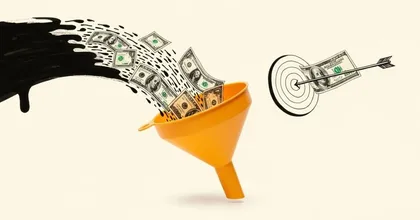
Here’s the number that should stop every demand gen leader mid-scroll: GPT-5.4 cites pricing pages 35 times more often than GPT-5.3. Not 35% more. 35x more.
When a high-intent buyer opens ChatGPT and asks “what does cost” or “compare pricing for tools,” GPT-5.4 doesn’t send them to a G2 review or a TechCrunch article. It goes directly to your pricing page — if that page is structured, crawlable, and legible to an AI retrieval system. If it isn’t, someone else’s pricing page gets cited instead.
This is the demand gen implication that most SEO-focused coverage of GEO misses entirely. Commercial pages — pricing, product features, homepage — have always mattered for conversion. They now also matter for discovery. The buyer’s first encounter with your pricing structure may happen inside a ChatGPT response, not on your website. That changes what “optimizing for conversion” means. It’s no longer just about what happens after the click. It’s about whether the AI accurately represents you before the click even occurs.
For B2B SaaS companies with complex, multi-tier pricing or sales-led models where pricing is gated, this creates a specific problem. If your pricing page says “contact sales” with no structural data, GPT-5.4 has nothing to cite — and will cite a competitor that does publish pricing information, or a review site’s approximation that may be outdated or inaccurate.
Fan-Out Queries: The Mechanism Behind the Shift
GPT-5.4 sends 8.5 fan-out queries per prompt. GPT-5.3 sends one. That 8.5x difference explains a lot.
Fan-out queries are the sub-searches a model runs behind the scenes to construct a response. GPT-5.3 runs a quick search, pulls from the top results, and synthesizes an answer. GPT-5.4 runs a structured research sequence — brand site, review validation, comparison sources — before it composes. It’s the difference between a junior analyst who Googles the first answer and a senior analyst who cross-references primary sources before writing up findings.
The volume of queries also makes GPT-5.4’s citation behavior newly trackable for brands. The Writesonic study documented that those 304 domain-targeted queries leave a footprint in server logs and analytics data — meaning brands can, for the first time, see AI-driven traffic that was previously invisible. This matters enormously for attribution. AI-influenced conversions have been showing up as direct traffic or branded search, masking the actual demand driver. That misattribution isn’t just an analytics inconvenience. It leads to budget decisions that underinvest in the channels actually driving pipeline.
The Attribution Blind Spot Hiding in Your Dashboard
One of the more uncomfortable findings from the research ecosystem around GEO is how systematically AI-driven demand gets miscounted. When a buyer encounters your brand through a ChatGPT response, clicks through to your site, and converts — that session typically registers as direct traffic or branded search. There’s no UTM parameter. No referral string from chatgpt.com. Just a user who arrived already knowing what they wanted.
For performance marketers and demand gen teams running attribution models, this creates a growing blind spot. The actual role of AI in the buyer journey is being systematically understated in current reporting. And as ChatGPT reaches 200 million weekly users and Google AI Overviews appear in 30–40% of queries, the size of that blind spot is expanding.
The practical implication: teams that rely on last-touch or even multi-touch attribution models built for a pre-AI search environment are making channel investment decisions on incomplete data. Paid search budgets, content investments, and SEO priorities are all being calibrated against a picture that’s missing a significant portion of the actual demand signal.
Why Strong SEO No Longer Guarantees AI Visibility
The 75% figure deserves to be repeated, because it challenges a core assumption many marketing organizations are still operating on: 75% of domains GPT-5.4 cites don’t appear in Google or Bing’s top results.
That means a brand with excellent domain authority, strong backlink profiles, and first-page Google rankings is not automatically visible in GPT-5.4 responses. Conversely, a brand with weaker traditional SEO metrics but well-structured, crawlable commercial pages and clear entity signals may be getting cited in premium ChatGPT responses while its better-ranked competitor is absent.
This is not an argument to abandon traditional SEO. The Writesonic research is clear that strong SEO foundations — domain authority, structured data, backlinks — still improve GEO performance. The two disciplines are complementary, not competing. But the 93% source divergence between GPT-5.3 and GPT-5.4 means that a single unified strategy no longer covers both. Brands need to audit their AI visibility across both models separately, because what gets them cited in one bears almost no relationship to what gets them cited in the other.
For agencies and consultants advising clients on digital strategy, this is a significant scope expansion. Model-specific optimization is becoming a real deliverable — not a future consideration.
What GEO Actually Requires in Practice
The Writesonic study used browser console scripts to extract fan-out queries from ChatGPT conversations — a methodology that’s replicable by any brand wanting to audit their own AI search presence. The approach involves opening a ChatGPT conversation, accessing the browser console, and running a script that surfaces the underlying search queries the model ran to construct its response. It’s not elegant, but it works, and it produces concrete data about whether a brand’s pages are being retrieved and cited.
Beyond that technical audit, the structural requirements for GEO on GPT-5.4 are becoming clearer. Commercial pages need to be crawlable — not hidden behind login walls, JavaScript rendering issues, or noindex tags. Pricing and product information needs to be machine-readable: clear headers, structured data markup, explicit product names and feature lists. Entity clarity matters: the model needs to be able to identify that a page belongs to a specific brand and covers a specific topic, without ambiguity.
One early adopter case documented in GEO research reported a combination of +18% organic traffic and +340% AI referrals after implementing integrated SEO and GEO strategies — suggesting the compounding effect of both disciplines working together is real, even if the sample size remains limited. The honest caveat: the Writesonic study covers 50 prompts across 119 conversations. Citation patterns likely vary by industry vertical, query type, and the specific competitive landscape a brand operates in. Treating these findings as universal law would be a mistake. Treating them as a strong directional signal worth acting on is not.
The Demand Gen Reframe This Moment Requires
The shift from GPT-5.3 to GPT-5.4 as a premium model matters for demand generation for a specific reason: the buyers most likely to use the premium tier are the buyers doing serious vendor research. They’re not casually browsing. They’re comparing options, evaluating pricing, and building shortlists. GPT-5.4’s user base skews toward high-intent, and those users are being sent directly to brand websites — to pricing pages, product pages, and feature comparisons — at a rate that has no precedent in how AI search has worked until now.
The demand gen implication isn’t that AI search replaces the rest of the marketing stack. It’s that the stack now has a new front door — one that opens directly into your most commercial pages, bypasses the awareness and consideration content that used to precede it, and operates according to rules that most marketing teams haven’t yet internalized. The brands that figure this out in 2026 won’t just gain AI visibility. They’ll gain a structural advantage in the buyer’s journey that compounds as AI-assisted research becomes the default behavior for the B2B buyers who matter most.
Read the full breakdown of GPT-5.4’s citation shift and get a practical checklist for optimizing your commercial pages for AI search.